
-
 4,08 € × 1×€4.08333333


A small, variegated green-cream bamboo
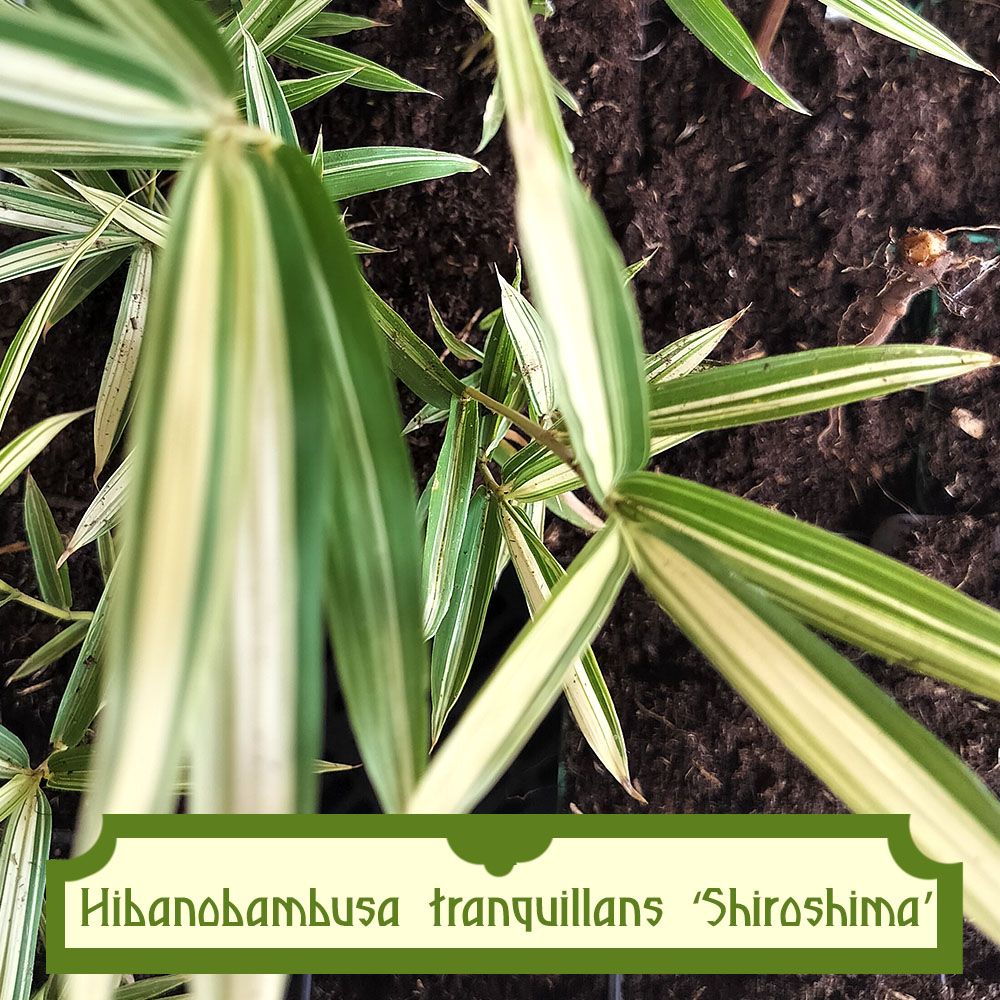
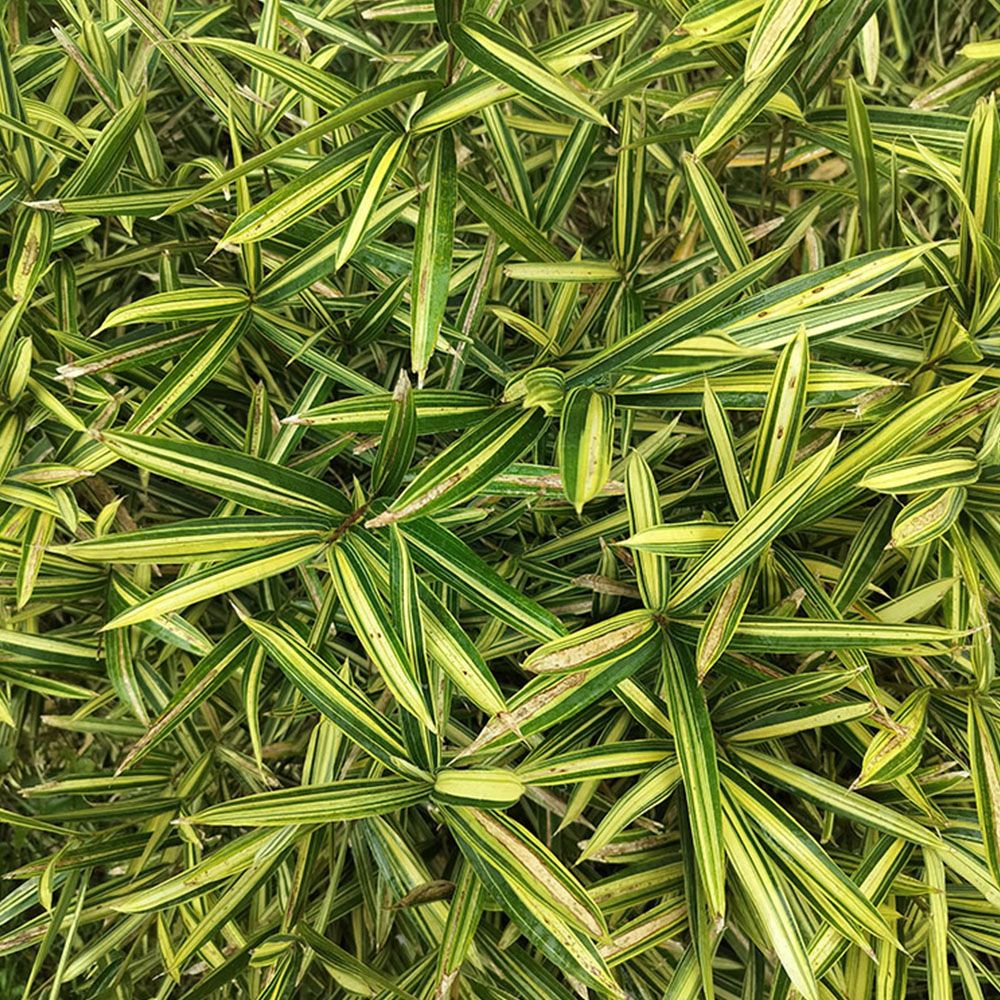
Hibanobambusa tranquillans ‘Shiroshima’ is a small, bushy variegated bamboo with long, light green leaves striped with cream.
The leaves are long, light green, striped cream and white, and evergreen. The sheaths covering the young shoots are brown and deciduous.
The leaves are particularly striking in the winter months as they are edged by a delicate pink line.
The canes are smooth, slightly grooved, green in color, sometimes faintly striped with creamy white.
This bamboo grows rapidly, forming a small, bushy and dense barrier, ideal for a hedge or border or a luminous standalone clump.
It is both drought and frost tolerant, easily growing in both full sun and full shade.
👨🌾GARDENING TIPS👨🌾: Hibanobambusa tranquillans ‘Shiroshima’
Learn more about gardening with Borage:
This variegated form appeared in 1977 as a variant of a plant then called Hibanobambusa tranquillans ‘Kemmei’ that occurred three years after its flowering.
This species is now thought to be a naturally occurring intergeneric hybrid that occurred in the 19th century between Phyllostachys nigra and Sasa veitchii from Honshu, Japan and it has more recently been described with the name × Phyllosasa tranquillans. From this cross it has inherited the 2 branches per node of Phyllostachys and the large leaves of a Sasa.
The specific epithet is from the Latin word ‘tranquillo’ meaning “quiet”, “calm”, “still” or “tranquil” but the reasoning behind its naming was not given by the author of the name.
It is a plant of the grass family (Poaceae), a type of woody-stemmed grass that develops from a running rhizomatous rootstock – allowing for its ability to survive difficult environmental conditions.
In this type of bamboo, the rhizomes spread outward from the base, which quickly expands and colonizes large areas.
What is a rhizome?
A rhizome is the main stem of the plant that runs typically underground and horizontally to the soil surface. It looks like a giant finger – or the continuation of the plant in its underground version.
They are extremely useful as the plant uses them to store starches, proteins, and other nutrients. This matters when new shoots must be formed or when the plant dies back for the winter.
The danger in rhizomes is that, if a rhizome is separated, each piece may be able to give rise to a new plant.
This is a process known as vegetative reproduction and is used by farmers and gardeners to propagate certain plants – but if you are a gardener, you also know that this is what makes bamboo impossible to eradicate.
Flowering in Hibanobambusa tranquillans ‘Shiroshima’ is extremely rare and irregular, as is typical of many bamboos. I haven’t seen it happen yet but it looks magical in the photos I’ve seen.
The inflorescences consist of small, inconspicuous grass-like spikelets borne along the culms.
No ornamental value is attributed to the flowers; the plant is cultivated almost exclusively for its foliage and habit.
Hibanobambusa tranquillans ‘Shiroshima’ reproduces primarily through vegetative propagation via its running rhizome system, which allows the plant to spread efficiently and form dense colonies.
Sexual reproduction through seed is exceptionally rare due to infrequent flowering cycles that may occur only once over several decades.
When flowering does occur, pollination is anemophilous (wind-driven), and seed set is unpredictable.
In cultivation, the cultivar is propagated by rhizome division to maintain its variegated characteristics, as seedlings do not reliably reproduce the cultivar’s traits.
This bamboo is highly tolerant of frost (down to approximately −20 °C), has moderate drought resistance once established, and has a high adaptability to various light conditions, from full sun to partial shade.
Hibanobambusa tranquillans ‘Shiroshima’ thrives in well-drained soils but is not particularly demanding in soil type.
Ecologically, its dense growth habit provides shelter for small fauna and contributes to windbreak and screening functions in cultivated landscapes.
Hibano Bamboo
Asia
| Weight | 0,5 kg |
|---|---|
| Exposure | Full Sun, Half Sun/Half Shade, Full Shade |
| Frost Tolerance | -15°C to -20°C |
| Soil | Any |
| Size | 2,5m H x 2,5m W |
Only logged in customers who have purchased this product may leave a review.


A perennial with purple flowers all summer long
A perennial with purple flowers all summer long


Long stalks with light, floating purple specks that attract bees
Long stalks with light, floating purple specks that attract bees


A perennial plant in the mint family that is adored by bees, royal families and tea drinkers.
A perennial plant in the mint family that is adored by bees, royal families and tea drinkers.


A Euphorbia that resembles a soft little cyprus tree
A Euphorbia that resembles a soft little cyprus tree


A shrublet composed of soft, finely divided silvery gray-white leaves.
A shrublet composed of soft, finely divided silvery gray-white leaves.


A sweet smelling ground cover, producing little blue flowers all summer long.
A sweet smelling ground cover, producing little blue flowers all summer long.


A toothy succulent from Madagascar, known as the Mother of Thousands.
A toothy succulent from Madagascar, known as the Mother of Thousands.


Winter flowering perennial with marbled blue-green leaves
Winter flowering perennial with marbled blue-green leaves


A distinctly silvery, silky and lacy perennial.
A distinctly silvery, silky and lacy perennial.


A grey-green spreading ground cover from the mountains.
A grey-green spreading ground cover from the mountains.


Jasmine with colorful foliage and lovely white flowers in summer
Jasmine with colorful foliage and lovely white flowers in summer


Known for its draping form of silver-gray foliage and radiant blooms.
Known for its draping form of silver-gray foliage and radiant blooms.


A daisy-like carpet of flowers
A daisy-like carpet of flowers


Looping elegance and ability to form a low flowering ground cover
Looping elegance and ability to form a low flowering ground cover


A native perennial with blue-green leaves and a tall yellow flower
A native perennial with blue-green leaves and a tall yellow flower


A spicy mint, known for its use in the production of liqueurs and herbal teas.
A spicy mint, known for its use in the production of liqueurs and herbal teas.


Silky white-grey leaves and tall striking flowers
Silky white-grey leaves and tall striking flowers


Gorgeous blushes of pink and white that appear in the coldest nights.
Gorgeous blushes of pink and white that appear in the coldest nights.


A dwarf perennial known for its vermillion colored flowers
A dwarf perennial known for its vermillion colored flowers


Catnip is known for its grey-green, aromatic foliage and masses of lavender blue flowers.
Catnip is known for its grey-green, aromatic foliage and masses of lavender blue flowers.


A yellow-green dappled variation of the fuzzy mint.
A yellow-green dappled variation of the fuzzy mint.


A sage known for its colorful yellow and green foliage and aromatic properties.
A sage known for its colorful yellow and green foliage and aromatic properties.


A delicate, fine leaved perennial with red flowers
A delicate, fine leaved perennial with red flowers
There are no reviews yet.