
-
 4,90 € × 1×€4.9


An annual herb with spectacular culinary and medicinal properties
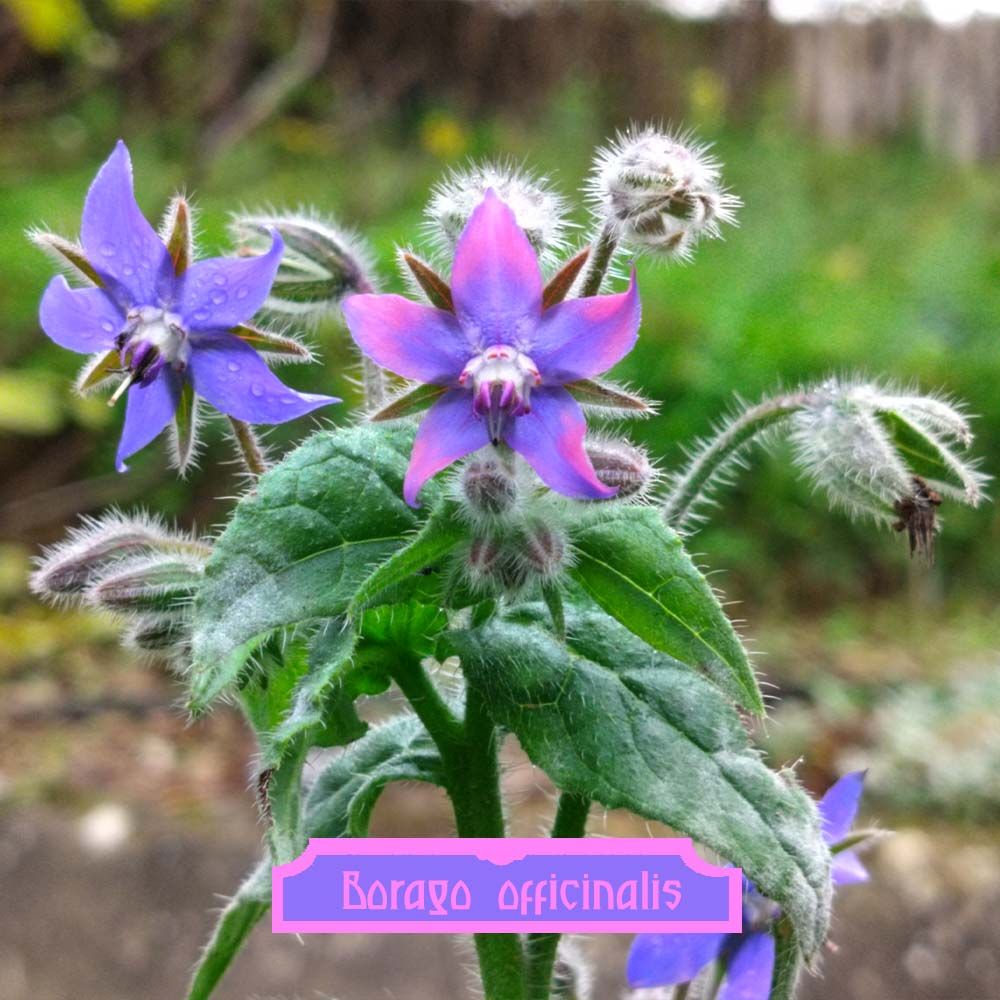
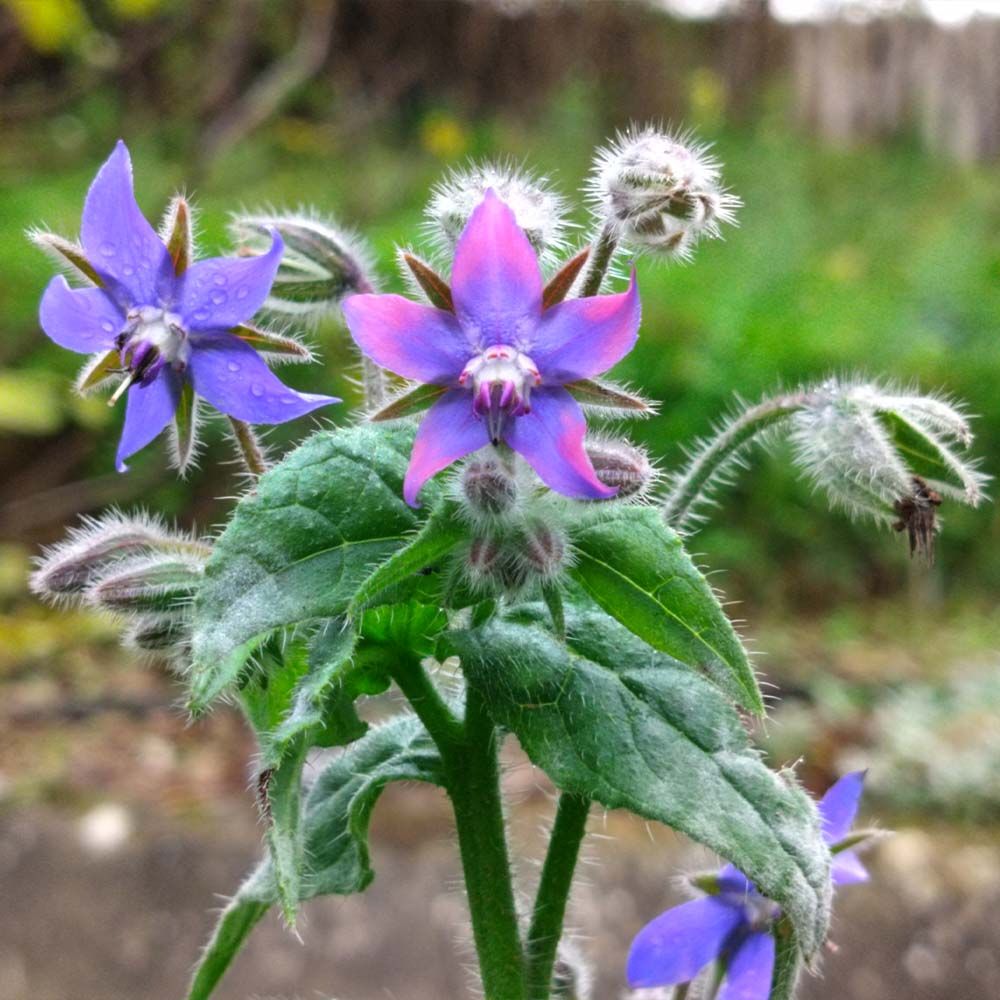
Borage (Borago officinalis), is an annual herb in the Boraginaceae plant family.
It is native to the Mediterranean region, but now cultivated around the world for its edible uses and herbal properties.
The flowers produce copious nectar which is used by honeybees to make a light and delicate honey.
The flower has a sweet, honey-like taste and is often used to decorate desserts and cocktails, sometimes frozen in ice cubes.
The leaves are large and rough, covered in bristles or hairs all over the stems and leave.
It is native to the Mediterranean region, and has naturalized in many other locales. It grows well in gardens in most of Europe, such as Ireland, Denmark, France, Germany, the United Kingdom.
👨🌾GARDENING TIPS👨🌾: Borago officinalis
Learn more about gardening with Borage:
👩🍳COOKING TIPS👩🍳: Borago officinalis
Since ancient times it has been one of the most famous and valuable herbs, and has been used in medicine for more than 700 years. It should be noted that the fresh herb contains trace toxins which are hepatotoxic, mutagenic and carcinogenic.
King Henry VIII’s last wife, Catherine Parr, used borage in a concoction to treat melancholy.
Francis Bacon thought that borage had “an excellent spirit to repress the fuliginous vapour of dusky melancholie”.
John Gerard’s Herball translated an old verse concerning the plant: “Ego Borago, Gaudia semper ago (I, Borage, bring always joys)”. However it has been stated recently that ‘gaudia’ is closer to ‘delight’ than ‘courage’
He asserts:
Those of our time do use the flowers in salads to exhilerate and make the mind glad. There be also many things made of these used everywhere for the comfort of the heart, for the driving away of sorrow and increasing the joy of the mind. The leaves and flowers of Borage put into wine make men and women glad and merry and drive away all sadness, dullness and melancholy, as Dioscorides and Pliny affirm. Syrup made of the flowers of Borage comfort the heart, purge melancholy and quiet the frantic and lunatic person. The leaves eaten raw engender good blood, especially in those that have been lately sick.
The Celtic name ‘burrach’ meant ‘glad courage’ .
Modern research indicates that borage can stimulate adrenaline production, which helps to lift you up. People who suffer from depression have been found to experience a dramatic drop in adrenaline.
Borage has also been shown to be the richest known plant source of gamma linoleic acid (GLA), an omega-6 polyunsaturated, essential fatty acid. Borage oil is available in capsule form and often marketed as a GLA supplement. Recent research has shown that GLA is active against various cancers, including brain, prostate and breast. GLA inhibits the spread of malignant tumours by restricting blood vessel growth.
Borage has actinomorphic (radially symmetrical), perfect (bisexual) flowers.
The flowers are typically bright blue, sometimes pink when young, and borne in scorpioid cymes.
Each flower has five fused petals forming a star shape and five sepals that are hairy and persistent.
The androecium consists of five stamens with dark purple to black anthers forming a cone around the style.
The gynoecium is composed of a superior ovary with a single style and bifid stigma.
Flowers are rich in nectar and highly attractive to pollinators.
Borago officinalis reproduces sexually by seed.
It is entomophilous (insect-pollinated), relying mainly on bees, especially honeybees and bumblebees.
The flower structure promotes efficient pollen transfer during foraging. The species is generally self-fertile but benefits from cross-pollination, which increases seed set.
After fertilization, the ovary develops into four nutlets, each containing one seed.
Borage readily self-seeds, contributing to its persistence in cultivation and semi-natural habitats.
Borage is an annual herbaceous plant native to the Mediterranean region but now widely naturalized in temperate areas.
It thrives in well-drained soils, full sun, and disturbed habitats such as gardens, field margins, and roadsides.
The plant is known for its strong role in supporting pollinators, providing abundant nectar over a long flowering period.
It is moderately drought-tolerant and often used in companion planting and ecological gardening.
Due to its prolific self-seeding, it can behave as a casual or minor weed in some environments.
Borage
Mediterranean
| Weight | 0,5 kg |
|---|---|
| Flower Color | 🔵 Blue |
| Flowering | May, June, July, August |
| Soil | Cool, Rocky/Well-Draining |
| Exposure | Full Sun |
| Frost Tolerance | -1°C to -5°C |
| Size | 0,6m H x 0,3m W |
Only logged in customers who have purchased this product may leave a review.


A perennial flowering plant that produces sweetly scented pink or white flowers all summer long.
A perennial flowering plant that produces sweetly scented pink or white flowers all summer long.


A luminous bush covered in white daisy flowers all summer long
A luminous bush covered in white daisy flowers all summer long


A perennial with purple flowers all summer long
A perennial with purple flowers all summer long


A glorious medicinal and tinctorial herb.
A glorious medicinal and tinctorial herb.


A perennial plant in the mint family that is adored by bees, royal families and tea drinkers.
A perennial plant in the mint family that is adored by bees, royal families and tea drinkers.


Catnip is known for its grey-green, aromatic foliage and masses of lavender blue flowers.
Catnip is known for its grey-green, aromatic foliage and masses of lavender blue flowers.


Delicate blue flowers surrounded by a green mist of lacy feathers for most of the summer.
Delicate blue flowers surrounded by a green mist of lacy feathers for most of the summer.


A sweet smelling ground cover, producing little blue flowers all summer long.
A sweet smelling ground cover, producing little blue flowers all summer long.


A fuzzy perennial that is largely grown for its essential oil.
A fuzzy perennial that is largely grown for its essential oil.


A fragrant ground cover with a unique shape
A fragrant ground cover with a unique shape


A sweet smelling culinary herb from Europe
A sweet smelling culinary herb from Europe


A mountain mint from the eastern United States.
A mountain mint from the eastern United States.


A spicy mint, known for its use in the production of liqueurs and herbal teas.
A spicy mint, known for its use in the production of liqueurs and herbal teas.


White pompom flowers to attract bees to your garden all summer long.
White pompom flowers to attract bees to your garden all summer long.


A highly aromatic, flowering perennial used for cooking in many cultures
A highly aromatic, flowering perennial used for cooking in many cultures


A yellow-green dappled variation of the fuzzy mint.
A yellow-green dappled variation of the fuzzy mint.


Winter flowering perennial with marbled blue-green leaves
Winter flowering perennial with marbled blue-green leaves


An evergrey, fragrant perennial that will bring a distinctly Mediterranean atmosphere.
An evergrey, fragrant perennial that will bring a distinctly Mediterranean atmosphere.


A striking mint with striped and flecked golden-yellow leaves that are gingery-minty.
A striking mint with striped and flecked golden-yellow leaves that are gingery-minty.


Known for its striking purple foliage and aromatic properties.
Known for its striking purple foliage and aromatic properties.


A perennial with large yellow flowers tipped with coppery-orange hues
A perennial with large yellow flowers tipped with coppery-orange hues


A highly fragrant, beautifully silver-grey bush with soft leaves and yellow flowers.
A highly fragrant, beautifully silver-grey bush with soft leaves and yellow flowers.


A perennial with bright daisy-like flowers, known for flavoring teas and syrups.
A perennial with bright daisy-like flowers, known for flavoring teas and syrups.


Looping elegance and ability to form a low flowering ground cover
Looping elegance and ability to form a low flowering ground cover
There are no reviews yet.