
-
 7,90 € × 1×€7.9
A dwarf perennial lemon-minty leaves and soft lavender-like flower spikes.
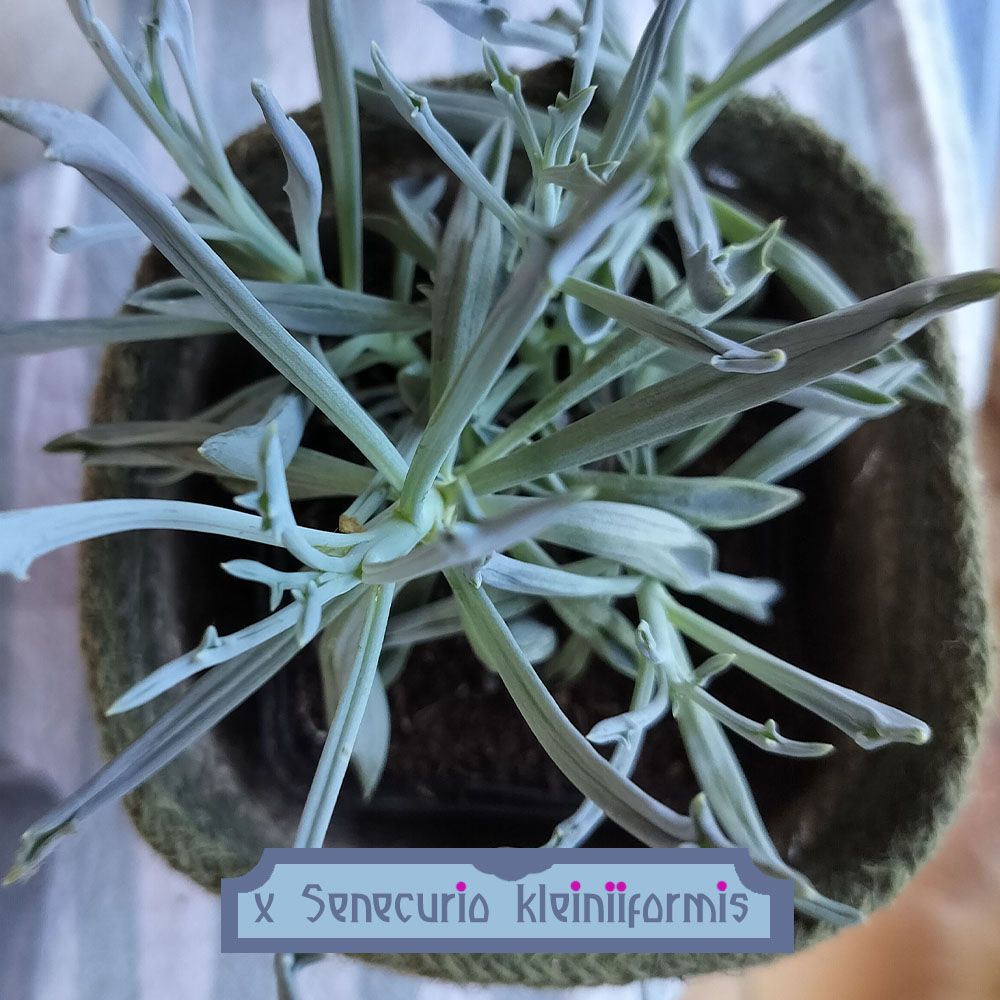
x Senecurio kleiniiformis is a magnificent blue-green hybrid succulent with leaves that are shaped like antlers.
Its leaves are blue-green and triangular shaped. They will change shape and size with the amount of light that they receive – stretching in the winter months and thickening in the summer months (in the temperate climates of Western Europe).
Its pale yellow blooms attract butterflies at the end of summer and early fall.
This species is drought tolerant and fire resistant, but it cannot survive frost
Senecurio × kleiniiformis is a hybrid species of flowering plant in the family Asteraceae, known for its ornamental and ecological value.
It has a complex taxonomic history: it has been variously placed in the genus Senecio as Senecio × kleiniiformis or in Kleinia, but recent studies suggest it is a hybrid between an unknown species of Curio and Senecio tropaeolifolius.
Initially, it was classified as Curio × kleiniiformis, but in 2020, the hybrid genus Senecurio was created specifically to accommodate it.
Senecurio × kleiniiformis is characterized by triangular, blue-green leaves, which give it a sculptural, architectural appearance in gardens and containers.
Its pale yellow blooms appear at the end of summer into early fall and are particularly attractive to butterflies and other pollinators, enhancing local biodiversity. I have not seen them yet, but I’m hoping that as they mature we’ll manage to catch a glimpse!
The plant’s overall growth habit is compact, making it suitable for rock gardens, succulent arrangements, and xeriscaping.
Senecurio × kleiniiformis reproduces both sexually via seeds and vegetatively through cuttings, a common strategy among hybrid succulents.
Its pale yellow blooms are hermaphroditic, containing both male (stamens) and female (carpels) organs, and they attract pollinators such as butterflies and bees, which can facilitate seed production.
However, in cultivation, vegetative propagation is far more common, as cuttings from stems or branches root readily under warm, well-drained conditions. This method ensures that desirable traits of the hybrid—such as drought tolerance, leaf shape, and bloom color—are preserved.
The plant’s vegetative reproduction allows it to form dense, spreading shrubs, providing architectural interest in gardens or containers and ensuring rapid establishment in xeriscaping or low-water landscapes.
Seed production, while less commonly used in horticulture, contributes to genetic diversity and can be important in breeding programs or experimental hybridization.
This species is highly drought tolerant and fire resistant, making it ideal for low-water landscaping in Mediterranean or semi-arid climates.
It prefers well-drained soil and full sun to partial shade, and it is best planted in areas where temperatures remain above freezing, as it cannot tolerate frost.
Its hybrid nature contributes to a resilient growth habit and reduced susceptibility to pests compared with some pure Senecio species.
Its drought tolerance and fire resistance make it a sustainable choice for xeriscaping and climate-resilient gardens, contributing to water conservation and biodiversity in cultivated landscapes.
South Africa
Subscribe to get the latest posts sent to your email.
| Weight | 0,5 kg |
|---|---|
| Exposure | Full Sun |
| Frost Tolerance | NONE |
| Soil | Poor, Sandy, Well-Draining |
| Size | 1m H x 1m W |
Only logged in customers who have purchased this product may leave a review.


A evergreen flowering graphically striking succulent
A evergreen flowering graphically striking succulent


A slow-growing succulent with graphic rambling stems
A slow-growing succulent with graphic rambling stems


A branching succulent with round, color-shifting leaves.
A branching succulent with round, color-shifting leaves.


A silver succulent that forms a small, clumping bush.
A silver succulent that forms a small, clumping bush.


A succulent with dark green, sword-shaped leaves.
A succulent with dark green, sword-shaped leaves.


Delicate blue flowers surrounded by a green mist of lacy feathers for most of the summer.
Delicate blue flowers surrounded by a green mist of lacy feathers for most of the summer.


A deciduous perennial with fleshy, blue-grey-green leaves that naturally thrives on the wind and sea swept coasts
A deciduous perennial with fleshy, blue-grey-green leaves that naturally thrives on the wind and sea swept coasts


White pompom flowers to attract bees to your garden all summer long.
White pompom flowers to attract bees to your garden all summer long.


A yellow-green dappled variation of the fuzzy mint.
A yellow-green dappled variation of the fuzzy mint.


Gorgeous blushes of pink and white that appear in the coldest nights.
Gorgeous blushes of pink and white that appear in the coldest nights.


Jasmine with colorful foliage and lovely white flowers in summer
Jasmine with colorful foliage and lovely white flowers in summer


A fuzzy, bright yellow, drought-resistant, indoor plant
A fuzzy, bright yellow, drought-resistant, indoor plant


A low spreading, ground cover plant with short pink pokers of small flowers all summer long.
A low spreading, ground cover plant with short pink pokers of small flowers all summer long.


Striking jet black, highly tolerant, adaptable Heuchera.
Striking jet black, highly tolerant, adaptable Heuchera.


A Euphorbia that resembles a soft little cyprus tree
A Euphorbia that resembles a soft little cyprus tree


A striking mint with striped and flecked golden-yellow leaves that are gingery-minty.
A striking mint with striped and flecked golden-yellow leaves that are gingery-minty.


A succulent plant in the iceplant family with bright carmine flowers.
A succulent plant in the iceplant family with bright carmine flowers.

Known for its magnificent orange flowers and fragrant leaves
Known for its magnificent orange flowers and fragrant leaves


Known for its draping form of silver-gray foliage and radiant blooms.
Known for its draping form of silver-gray foliage and radiant blooms.


A flowering plant in the family Plantaginaceae that produces graphically striking, blue candle-like flowers.
A flowering plant in the family Plantaginaceae that produces graphically striking, blue candle-like flowers.


A bromeliad featuring a three colored, striped flower
A bromeliad featuring a three colored, striped flower


A cultivar with larger all-green leaves and thousands of pups along their broad edges.
A cultivar with larger all-green leaves and thousands of pups along their broad edges.


A variation on the valerian theme – with soft pink flowers
A variation on the valerian theme – with soft pink flowers

Bright green foliage and delicate white flowers with light pink veins
Bright green foliage and delicate white flowers with light pink veins

Soft grey velvety velvety bush covered in bright pink flowers
Soft grey velvety velvety bush covered in bright pink flowers


Looping elegance and ability to form a low flowering ground cover
Looping elegance and ability to form a low flowering ground cover

There are no reviews yet.