
-
 4,00 € × 1×€4
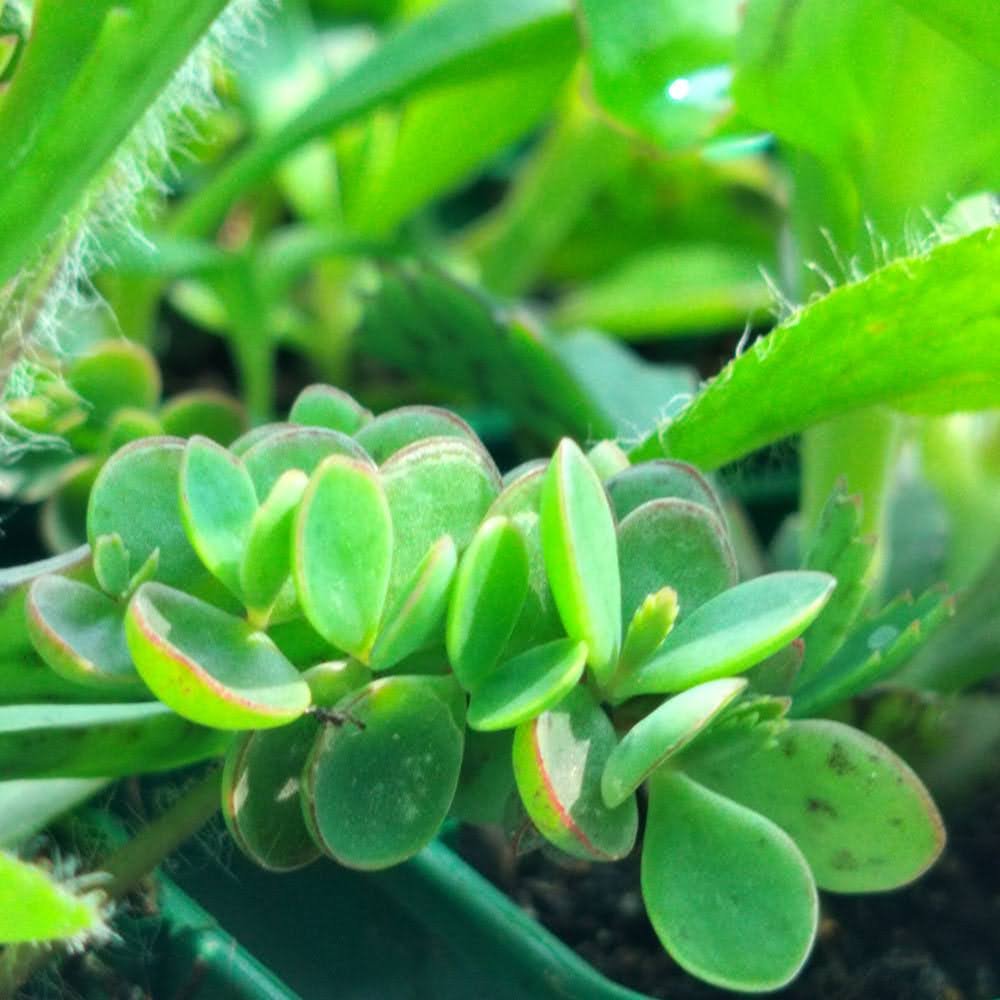


A perennial flowering herb with medicinal properties
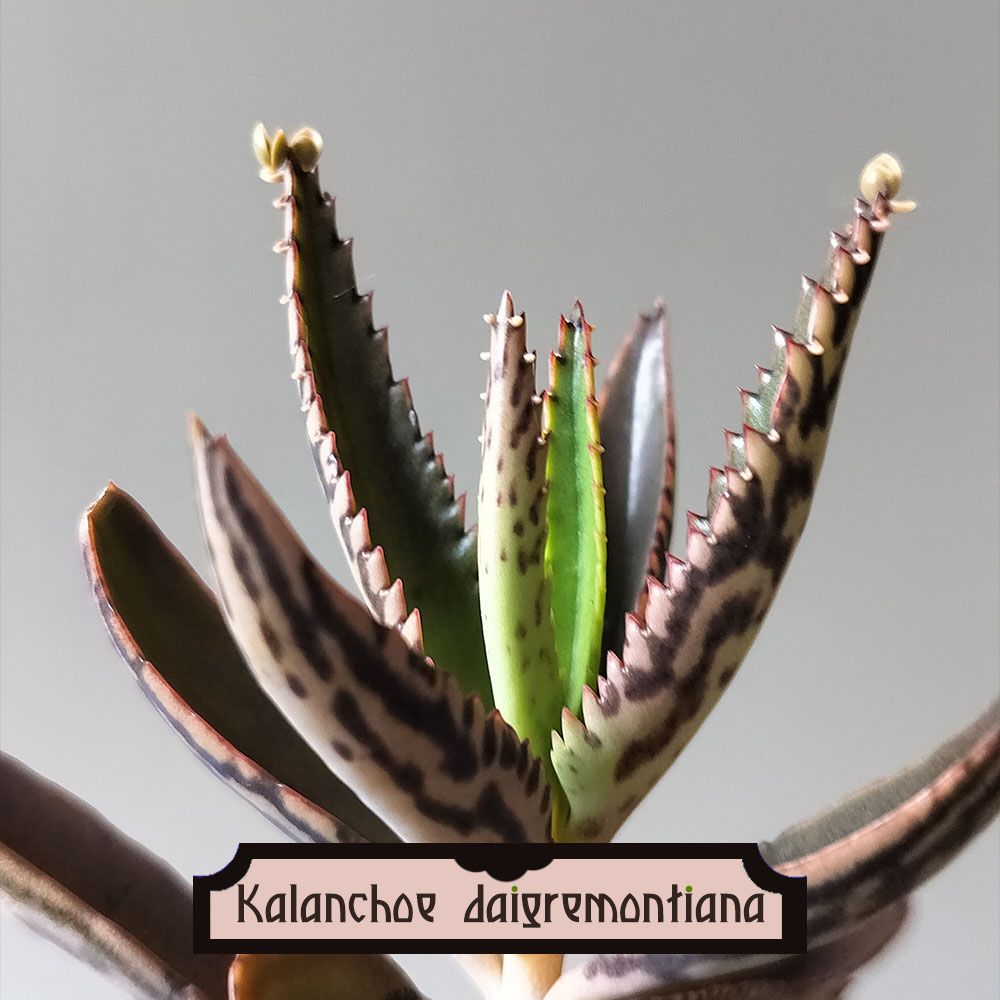
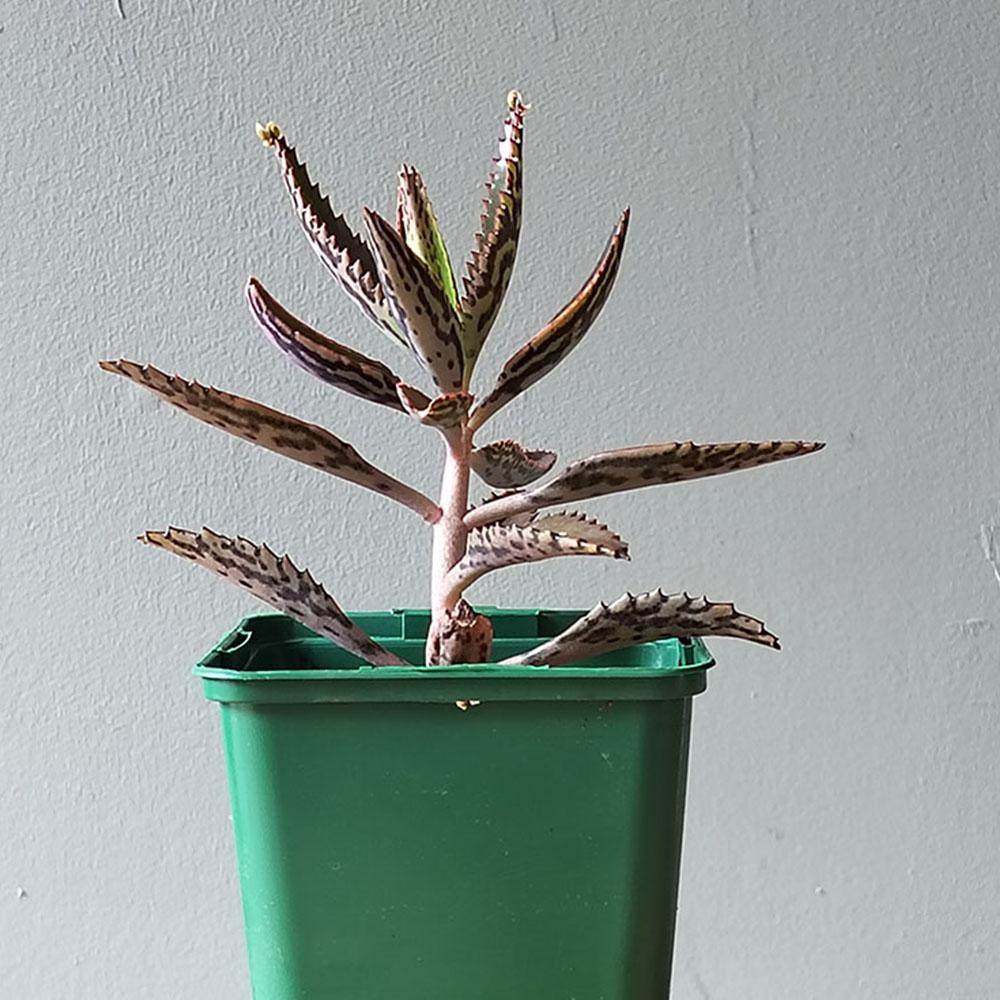
Kalanchoe daigremontiana is a succulent from Madagascar, known for its fascinating method of reproduction as well as its striking beauty.
The leaves have a distinct coloring – green on top with a bluish hue, striped purple on the bottom.
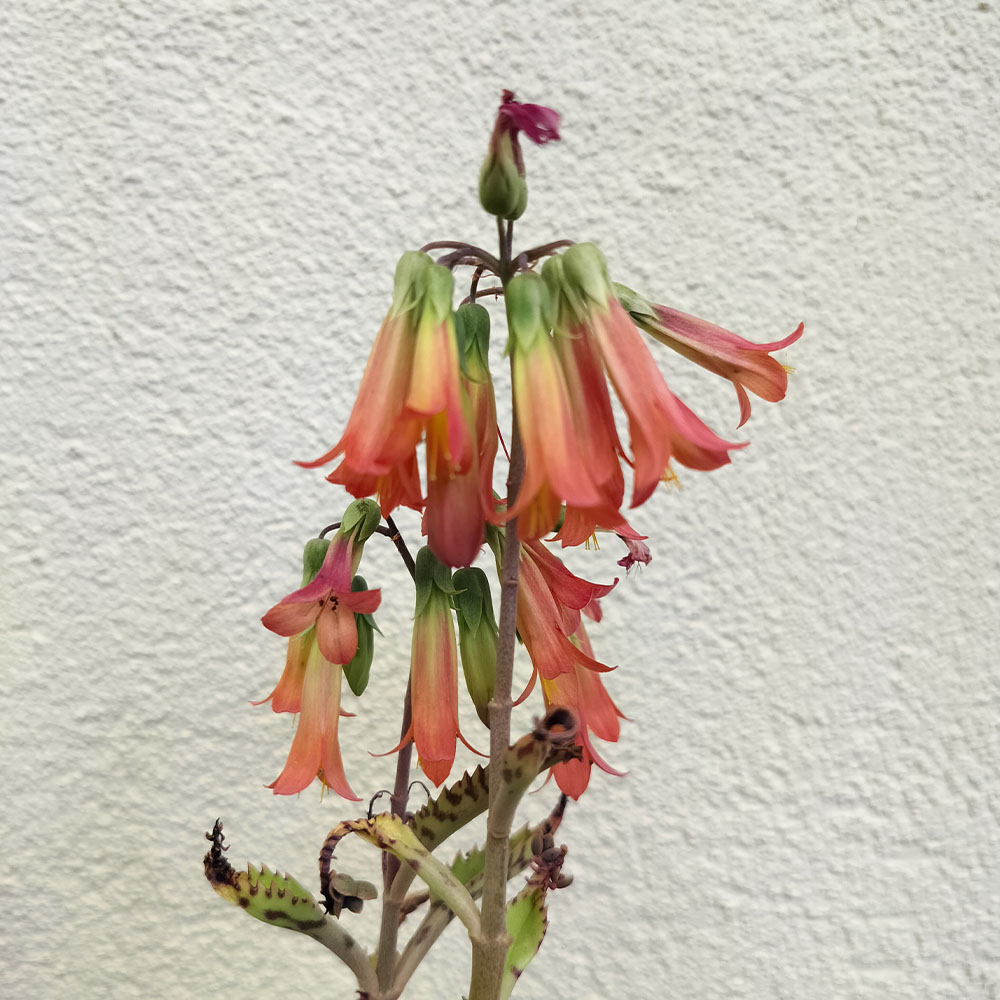
The inflorescences shoot up on long stalks and produce small orange and pink bell flowers. It is rare that it will bloom indoors.
They are particularly capable of withstanding periods of drought as well as thriving in rock and dry soil.
They grow in bunches, constantly dropping their pups , forming large colonies and capable of taking over entire garden boxes and indoor planters. When they are many, they begin to look like a pre-historic forest. Something out of Jurassic Park maybe.
It’s great, highly recommend.
Learn more about this Mother of Thousands:
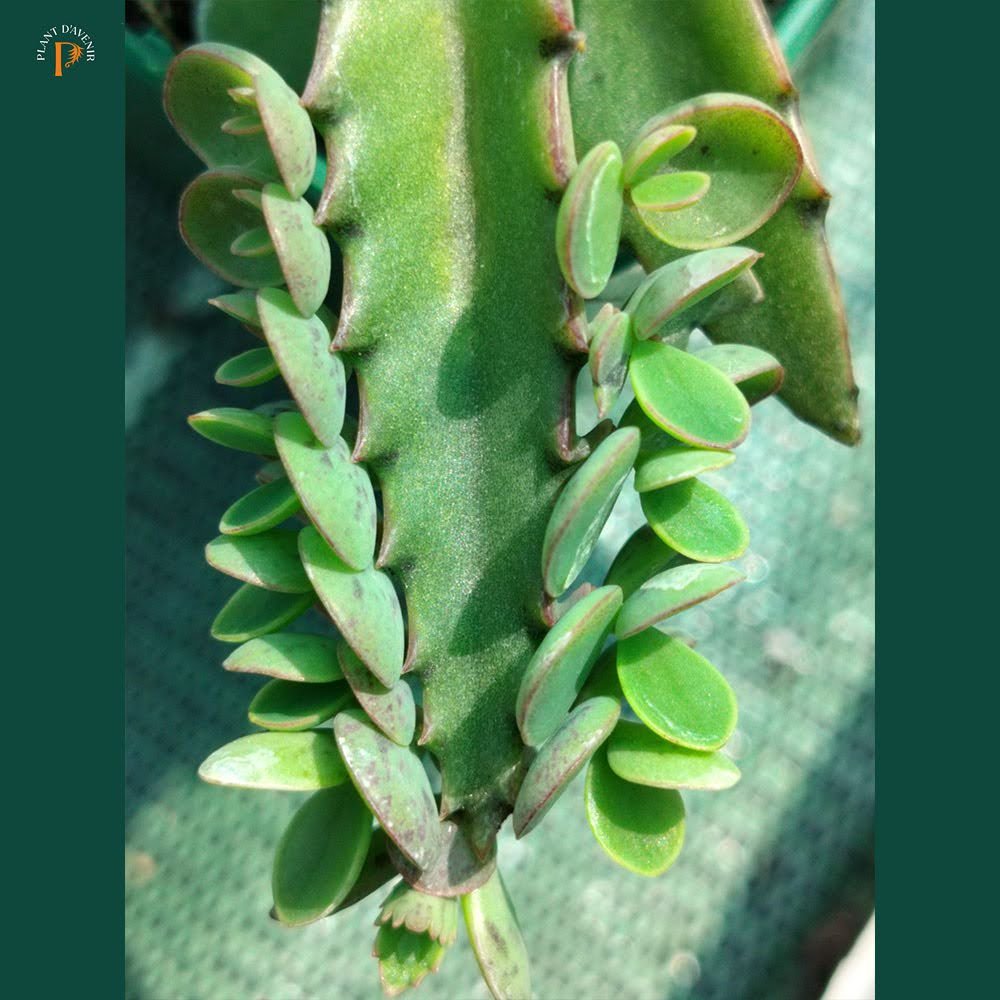
It is colloquially known as “Mother of Thousands” because this plant propagates vegetatively, producing thousands of little plantlets on its leaf margins.
You can just place the plantlets on the dry soil, cover them with a bit of shrink wrap – and voila, another mother!
Be careful – what is marvelous on the one hand can quickly become treacherous on the other. The propicious reproduction of the plant can make it invasive, so make sure to keep an eye on your ecosystem.
Kalanchoe daigremontiana, commonly known as Mother of Thousands, produces distinctive tubular flowers when the plant reaches maturity.
The flowers are bell-shaped and pendulous, arranged in terminal panicles that create an attractive display.
Each flower measures about 2-3 cm in length and displays a characteristic pinkish-gray to coral-pink coloration, though the exact shade can vary.
The corolla is tubular with four petals fused together, terminating in reflexed lobes at the tip that curl backward.
The flowers hang downward in loose clusters, giving them a delicate, pendant appearance.
Within each flower, eight stamens are arranged in two whorls and attached to the inner surface of the corolla tube.
Blooming typically occurs during winter to early spring in the plant’s native range, though flowering can be somewhat irregular in cultivation.
Plants generally need to reach 2-3 years of age before they are mature enough to produce flowers – though I have seen many of my plants flower in their first and second year. It seems to depend on their environement and the amount of light they receive.
This species exhibits a remarkable dual reproductive strategy that heavily favors asexual propagation.
The most extraordinary feature of K. daigremontiana is its ability to produce vegetative propagules in the form of tiny plantlets, called bulbils, along the margins of its leaves.
These plantlets develop in the serrations between the triangular “teeth” that line each leaf edge.
What makes this particularly unusual is that each plantlet develops into a complete miniature plant while still attached to the parent leaf, forming roots, stems, and tiny leaves before it ever touches the ground.
The parent plant can produce hundreds of these plantlets simultaneously, creating a living fringe along every mature leaf.
When the plantlets reach sufficient size, they drop readily from the parent, and if they land on suitable substrate, they quickly establish themselves as independent plants.
Sexual reproduction also occurs but plays a secondary role in the species’ propagation strategy.
The tubular flowers can be pollinated primarily by birds, particularly hummingbirds in regions where the plant has been introduced, as well as by various insects – but this is not the case in our frosty temperate climates.
Kalanchoe daigremontiana is native to Madagascar, where it inhabits dry, rocky environments and areas of natural disturbance.
The plant is physiologically adapted to arid conditions through CAM (Crassulacean Acid Metabolism) photosynthesis, which allows it to conserve water by opening its stomata at night rather than during the day.
This adaptation, combined with its succulent leaves that store water, enables the plant to thrive in environments that would stress many other species.
The species has become highly invasive in warm climates worldwide, including Australia, the Caribbean, and parts of Africa.
Mother of Thousands
Devil’s Backbone.
Madagascar
Subscribe to get the latest posts sent to your email.
| Weight | 0,5 kg |
|---|---|
| Flowering | March, April, May |
| Soil | Sandy |
| Exposure | Full Sun |
| Frost Tolerance | NONE |
| Size | 1m H x 0.6m W |
Only logged in customers who have purchased this product may leave a review.


A silver succulent that forms a small, clumping bush.
A silver succulent that forms a small, clumping bush.

A gorgeous succulent with blue antlers
A gorgeous succulent with blue antlers


A fuzzy, bright yellow, drought-resistant, indoor plant
A fuzzy, bright yellow, drought-resistant, indoor plant


Gorgeous blushes of pink and white that appear in the coldest nights.
Gorgeous blushes of pink and white that appear in the coldest nights.


A Tradescantia with compact stems and fairly large white and silvery green variegated leaves.
A Tradescantia with compact stems and fairly large white and silvery green variegated leaves.

A succulent with thin, spiralling square leaves
A succulent with thin, spiralling square leaves


Darker foliage, fuzzy underleaves and a powerful sun and drought resistance.
Darker foliage, fuzzy underleaves and a powerful sun and drought resistance.


A blue grey succulent in the Crassulae family with stiff foliage resembling little spruce trees.
A blue grey succulent in the Crassulae family with stiff foliage resembling little spruce trees.


A lovely succulent that develops thick trailing stems covered with overlapping, plump, blue-green leaves as it grows.
A lovely succulent that develops thick trailing stems covered with overlapping, plump, blue-green leaves as it grows.


A succulent known for the unctuous gel hidden in its leaves
A succulent known for the unctuous gel hidden in its leaves


A succulent with dark green, sword-shaped leaves.
A succulent with dark green, sword-shaped leaves.


A tender perennial known for its striking purple foliage.
A tender perennial known for its striking purple foliage.


A fast-growing, sprawling tropical perennial with random, mottled yellow and green variegation.
A fast-growing, sprawling tropical perennial with random, mottled yellow and green variegation.


A slow-growing succulent with graphic rambling stems
A slow-growing succulent with graphic rambling stems


Dark green and purple little leaves
Dark green and purple little leaves


Pale mauve-green leaves and stems edged with a fine purple line
Pale mauve-green leaves and stems edged with a fine purple line


A variegated version of the deep purple variety of Tradescantia.
A variegated version of the deep purple variety of Tradescantia.


A cultivar with larger all-green leaves and thousands of pups along their broad edges.
A cultivar with larger all-green leaves and thousands of pups along their broad edges.


A bromeliad featuring a three colored, striped flower
A bromeliad featuring a three colored, striped flower


A zebra-patterned indoor creeping plant
A zebra-patterned indoor creeping plant


A self-seeding annual with bright yellow flowers
A self-seeding annual with bright yellow flowers

Lemon yellow daisies atop soft, ferny leaves
Lemon yellow daisies atop soft, ferny leaves


An intensely fragrant and profusely flowering thyme with grey-green, soft leaves.
An intensely fragrant and profusely flowering thyme with grey-green, soft leaves.


Mediterranean aromatic perennial with soft pink flowers
Mediterranean aromatic perennial with soft pink flowers
There are no reviews yet.