
-
 4,90 € × 1×€4.9
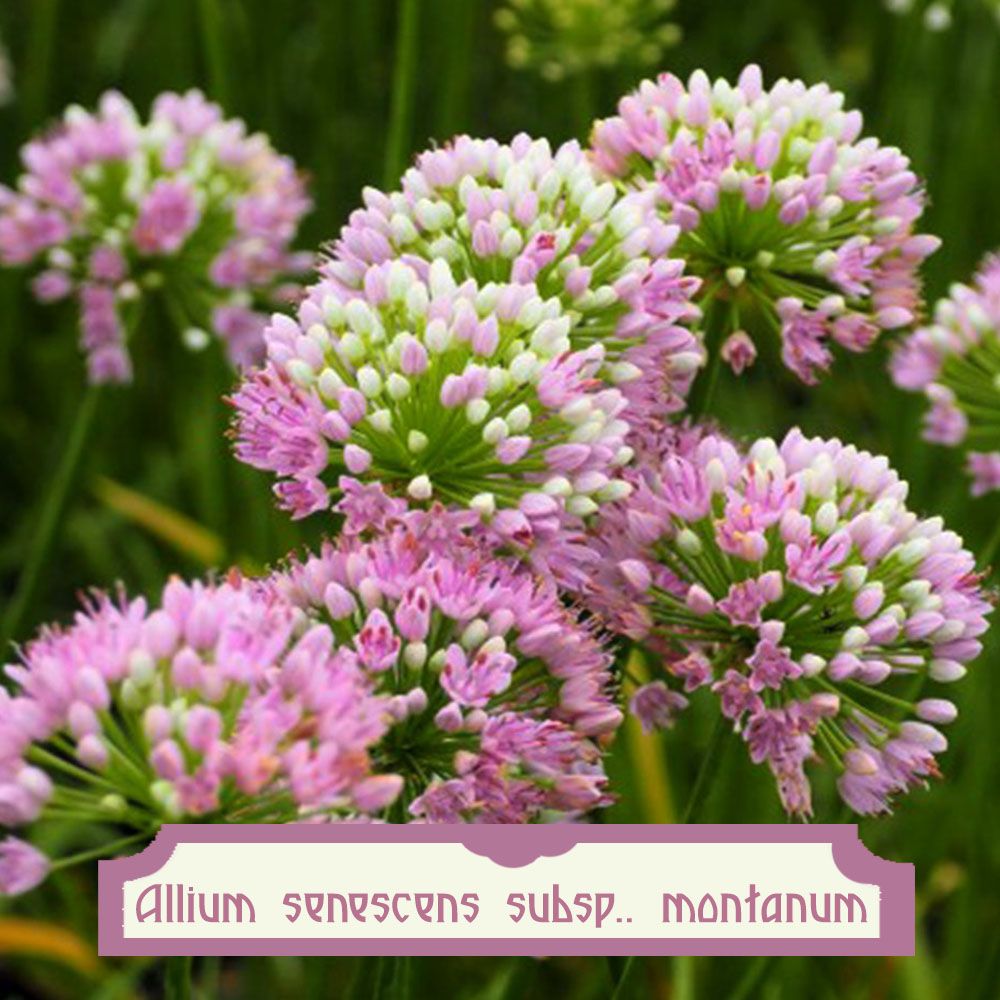
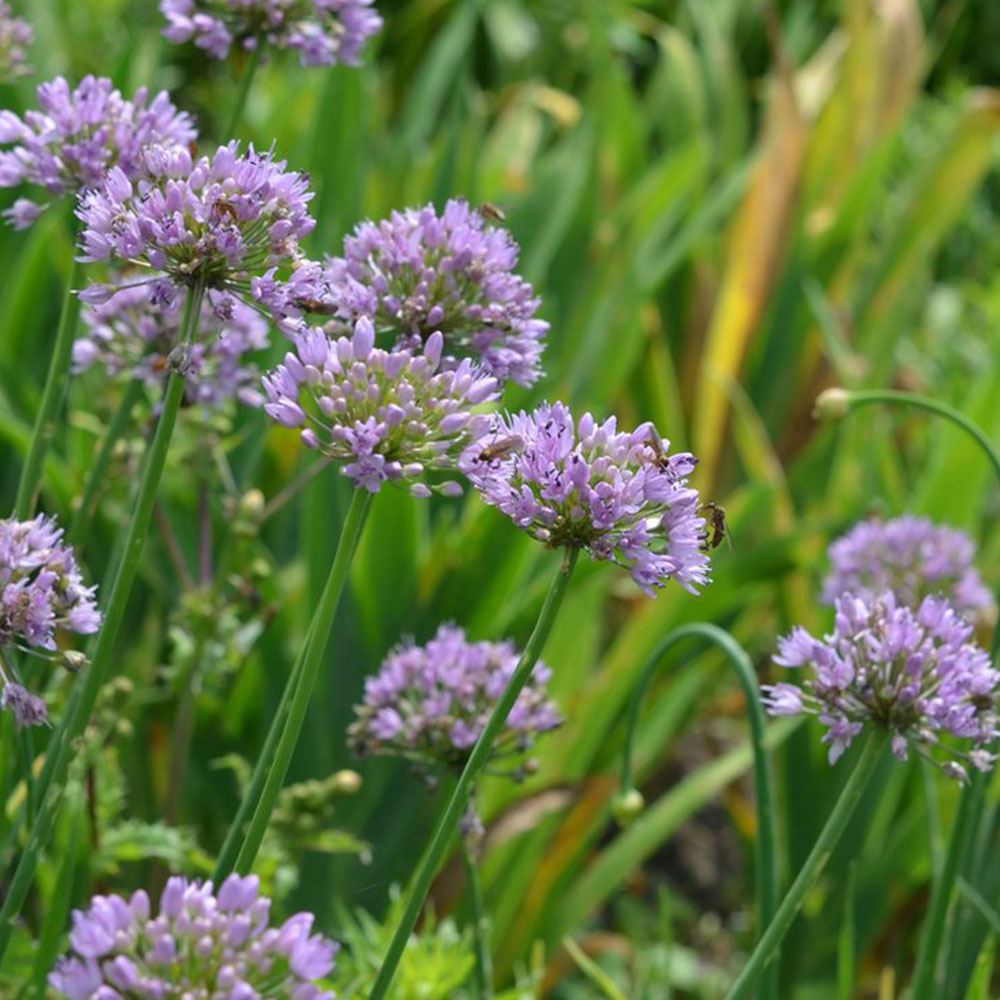


Allium senescens subsp. montanum, also known as Mountain Garlic, is a wonderful wild plant that somewhat resembles chives.
The flowers are dense, spherical umbels that look like candy-pink, pompom-like flowers the size of ping pong balls.
The leaves are thick, flat, twisting, wavy and edible. They give off a strong onion or garlic scent, making it a great addition to a number of dishes (eggs/grilled dishes/vegetables/cheese you name it!)
This is a ground-covering perennial forms a clump of grass-like, funny wavy foliage with a lovely bluish-green hue.
It is both hardy and drought-tolerant in summer.
It is ideal for a wild gardens or xeriscaping, as a low border for instance, but it is also magnificent (and delicious) in a container in the city.
👨🌾GARDENING TIPS👨🌾: Allium senescens subsp. montanum
-
- If you keep the soil moist, the flowering can continue for up to four months!
- The flavor is milder than garlic and can be eaten raw in salads, roasted, or sautéed.
- If the Mountain garlic has found a happy place, it will spread very quickly – so eat up!
- Looks great/ cook with Sedum Chocolat Cherry, Sedum Variegata, Sedum Semptemberglut
Learn more about gardening with German Garlic:
Tales & The Botany: Allium senescens subsp. montanum
This is a botanical garlic, belonging to the Alliaceae (Liliaceae) family, and has a fleshy storage organ that multiplies by forming bulbils, allowing the plant to expand over the years.
You can separate them carefully after a year or so and replant elsewhere, allowing for another garlic patch to form!
Ecology
Allium montanum is a hardy, drought-tolerant species native to rocky grasslands, open woodlands, and mountainous regions of southern and central Europe.
It thrives in well-drained, often poor or stony soils, where competition from more vigorous plants is limited.
This ecological preference makes it particularly well suited to dry gardens, gravel beds, and naturalistic plantings.
The plant’s sulfur-rich tissues give it a characteristic onion scent, which may help discourage herbivores and pests, contributing to its resilience in both wild and cultivated settings.
Once established, Allium montanum is long-lived and low-maintenance, tolerating heat, drought, and seasonal neglect. In suitable conditions, it can gently naturalize without becoming invasive, forming small, stable colonies that integrate well into meadow-style or xeriscape gardens.
Reproduction
Allium montanum reproduces both sexually (by seed) and vegetatively (by bulb division), giving it a flexible and resilient life strategy.
Sexual reproduction occurs following insect pollination.
In late spring to early summer, flowering stems rise above the foliage, bearing umbels of small, star-shaped flowers.
Bees and other pollinators transfer pollen between flowers, leading to fertilization.
Each flower then develops into a small capsule containing several black, angular seeds, which are dispersed by gravity, wind, rain, and passing animals.
Vegetative reproduction takes place when the underground bulb divides into offsets (cloves) over time.
These daughter bulbs gradually form small clumps, allowing the plant to persist locally even in years with poor seed set.
While seed-grown plants introduce genetic diversity, bulb division ensures reliable, steady spread and long-term survival.
Floral Morphology
The flowers of Allium montanum are arranged in a compact to slightly loose umbel carried on a slender, upright scape.
Each umbel consists of numerous small, star-shaped flowers, creating a delicate yet eye-catching display.
Individual flowers are composed of six tepals (undifferentiated petals and sepals), typically in shades of soft pink to lilac, sometimes deepening toward the center.
At the heart of each flower are six protruding stamens tipped with pale yellow to pinkish anthers, surrounding a single central pistil.
The floral structure is adapted for insect pollination:
-
The open, radial symmetry allows easy access for a wide range of pollinators.
-
The exposed stamens and nectar-rich base facilitate efficient pollen transfer.
This refined but simple floral architecture gives Allium montanum both its ornamental charm and its ecological value as a pollinator-friendly species.
Other Names:
German Garlic
Origin:
Western Europe and Northern Asia
Discover more from plant d'Avenir
Subscribe to get the latest posts sent to your email.
| Weight | 0,5 kg |
|---|---|
| Planting Season | March to May, September to November |
| Flowering | June, July, August, September |
| Foliage | Deciduous |
| Exposure | Full Sun |
| Frost Tolerance | -20°C to -25°C |
| Soil | Cool, Moist, Dry, Well-Draining |
| Size | 0.35m H x 0.4m W |
Reviews
Only logged in customers who have purchased this product may leave a review.
You may also like…


Allium ampeloprasum var. ampeloprasum
A large bulb loved for its garlic flavoured leaves
A large bulb loved for its garlic flavoured leaves
4,90 €
Related Products


Erigeron kavinskianus
A daisy-like carpet of flowers
A daisy-like carpet of flowers
Price range: 4,90 € through 8,00 €


Stachys byzantina
Silky white-grey leaves and tall striking flowers
Silky white-grey leaves and tall striking flowers
4,00 €


Artemisia Valerie Finnis
A semi-evergreen, aromatic variation on the theme of Artemisia.
A semi-evergreen, aromatic variation on the theme of Artemisia.
Price range: 4,00 € through 12,00 €


Hieracium maculatum Leopard
A native perennial with blue-green leaves and a tall yellow flower
A native perennial with blue-green leaves and a tall yellow flower
3,00 €


Tradescantia Blushing Bride
Gorgeous blushes of pink and white that appear in the coldest nights.
Gorgeous blushes of pink and white that appear in the coldest nights.
Price range: 4,00 € through 8,00 €


Euphorbia myrsinites
Known for its draping form of silver-gray foliage and radiant blooms.
Known for its draping form of silver-gray foliage and radiant blooms.
4,90 €


Tanacetum densum subsp amani
A shrublet composed of soft, finely divided silvery gray-white leaves.
A shrublet composed of soft, finely divided silvery gray-white leaves.
Price range: 4,90 € through 12,00 €


Potentilla anserina
A distinctly silvery, silky and lacy perennial.
A distinctly silvery, silky and lacy perennial.
4,90 €


Echinacea purpurea
A perennial with purple flowers all summer long
A perennial with purple flowers all summer long
4,90 €


Trachelospermum asiaticum ‘Ogon Nishiki’
Jasmine with colorful foliage and lovely white flowers in summer
Jasmine with colorful foliage and lovely white flowers in summer
4,90 €


Euphorbia cyparissias Clarice Howard
A Euphorbia that resembles a soft little cyprus tree
A Euphorbia that resembles a soft little cyprus tree
4,90 €


Glechoma hederacea
A sweet smelling ground cover, producing little blue flowers all summer long.
A sweet smelling ground cover, producing little blue flowers all summer long.
4,00 €


Mentha x piperita ‘Chartreuse’
A spicy mint, known for its use in the production of liqueurs and herbal teas.
A spicy mint, known for its use in the production of liqueurs and herbal teas.
4,90 €


Melissa officinalis
A perennial plant in the mint family that is adored by bees, royal families and tea drinkers.
A perennial plant in the mint family that is adored by bees, royal families and tea drinkers.
3,00 €


Vinca minor
Looping elegance and ability to form a low flowering ground cover
Looping elegance and ability to form a low flowering ground cover
4,90 €


Hellebore argutifolius
Winter flowering perennial with marbled blue-green leaves
Winter flowering perennial with marbled blue-green leaves
4,90 €


Cerastium tomentosum var. columnae
A grey-green spreading ground cover from the mountains.
A grey-green spreading ground cover from the mountains.
4,00 €
recent view product


Achillea millefolium Red Velvet
A flowering perennial known for its deep red flowers and long flowering season.
A flowering perennial known for its deep red flowers and long flowering season.
4,90 €

Nepeta cataria
Known for its grey-green, aromatic foliage and masses of lavender blue flowers.
Known for its grey-green, aromatic foliage and masses of lavender blue flowers.
4,90 €


Rosmarinus officinalis Majorca Pink
Mediterranean aromatic perennial with soft pink flowers
Mediterranean aromatic perennial with soft pink flowers
Price range: 4,90 € through 12,00 €

Leucanthemum x superbum Brightside
A bushy perennial that produces an explosion of large white flowers
A bushy perennial that produces an explosion of large white flowers
4,90 €


Crassula ovata ‘Hobbit’
Unusual variation on the Jade Plant
Unusual variation on the Jade Plant
4,90 €
There are no reviews yet.