
No products in the cart.
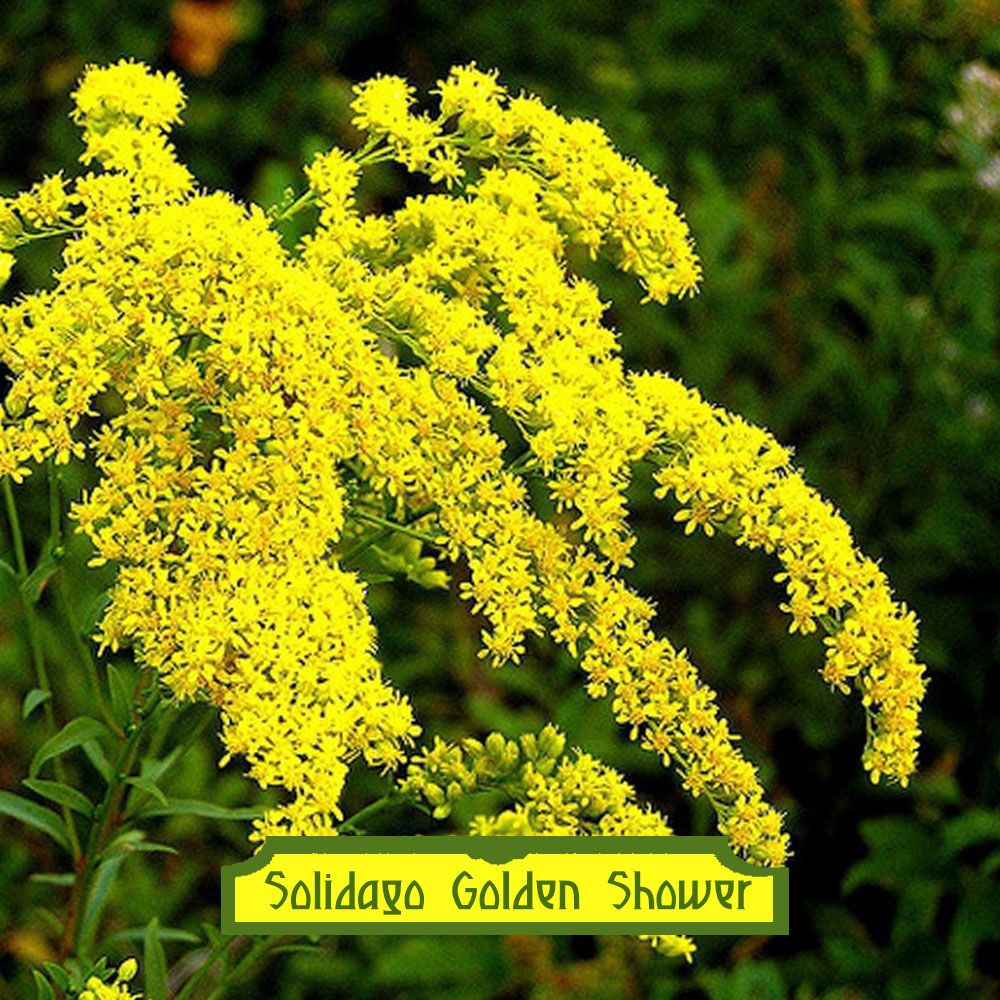
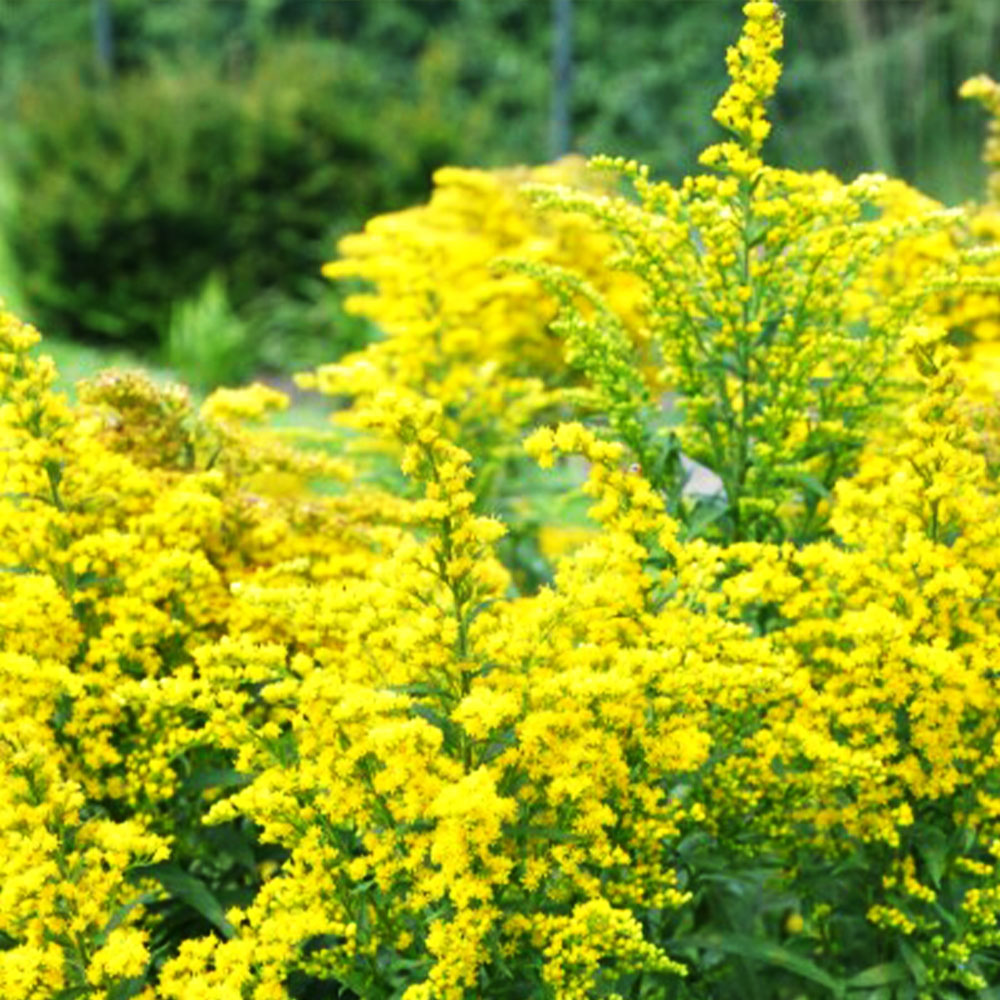
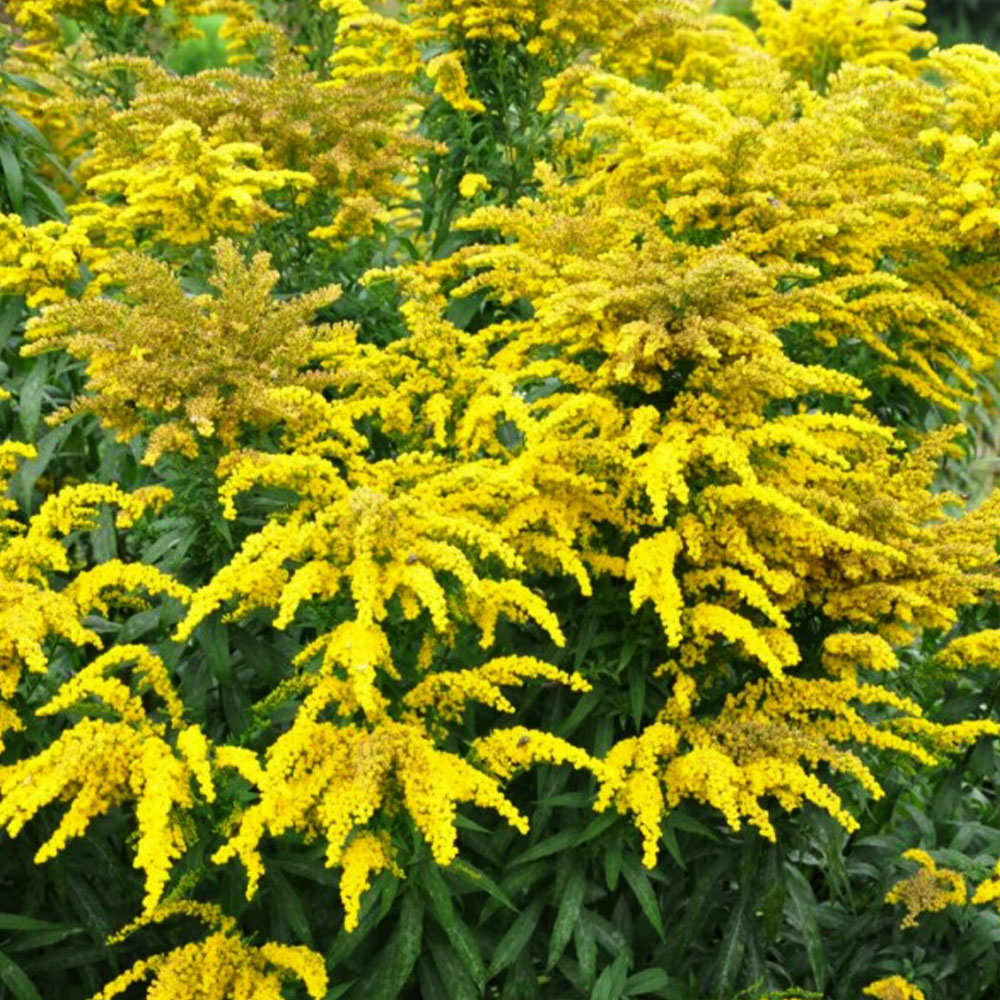


Solidago ‘Golden Shower’ is a cultivar of the genus Solidago that is known for its abundant, bright yellow flower clusters.
This plant is known for its bright yellow, showy flowers, which appear in late summer to fall and attract pollinators and butterflies.
The leaves of Solidago plants are simple, lance-shaped, and arranged alternately along the stem.
The flowers are small, bright yellow, and grouped in dense clusters or panicles.
Goldenrod usually blooms in late summer to early autumn, often providing one of the last nectar sources for pollinators before winter.
They are considered to be one of the most important plant for pollinator biodiversity in the United States.
- 🎤Although Solidago species are often mistakenly blamed for hay fever, they are actually not the primary cause. Ragweed, which blooms at the same time, is the main allergen responsible.
👩🌾GARDENING TIPS👩🌾: Solidago ‘Golden Shower’
-
- ✂️ Pruning: It is helpful to cut back spent flowers after blooming to encourage new growth. This also helps to keep the plant tidy and prevent self-seeding.
- ➗Dividing: If Golden Shower becomes too crowded, you can divide the plant every couple of years in early spring to maintain its health and vigor.
- Loves full sun and well-drained soils
- Its fibrous root system helps prevent soil erosion, and the plant is remarkably resilient, thriving even in disturbed areas.
- Absolutely best grown in groups as they create a remarkable ‘golden rainfall’ effect
- Looking great with any and all Blue/Purple Asters
Learn more about gardening with Goldenrod:
Beware: Certain North American species of goldenrod, such as Solidago canadensis and Solidago gigantea, have become invasive in Europe,
The Tales & The Botany : Solidago ‘Golden Shower’
This is one of my favorite tales.
The inventor Thomas Edison experimented with goldenrod to produce rubber, which it contains naturally only in its leaves.
Edison created a fertilization and cultivation process to maximize the rubber content in each plant which was around 7%. His experiments produced a giant 3.7m plant that yielded as much as 12% rubber.
The tires on the Model T given to him by his friend Henry Ford were made from goldenrod.
During the rubber shortages in the US during WWII, extensive experiments were done to see if goldenrod rubber extraction could be industrialized, but the compound was tacky and had low tensile properties, making it too inefficient for industrial production.
Myths and Traditions
In Victorian flower language, goldenrod symbolized good luck and encouragement. People sometimes carried goldenrod in their pockets as a charm for fortune.
In some regions, goldenrod was considered a harbinger of gold or prosperity, likely because of its bright yellow color, which resembles sunlight or gold.
Historically, Native Americans used goldenrod for a variety of medicinal purposes, including treating urinary tract issues, inflammation, and wounds.
Today, goldenrod is sometimes used in herbal teas or tinctures for its mild diuretic and anti-inflammatory properties.
Gardeners also value goldenrod for its bright yellow blooms that add long-lasting color to late-summer and autumn landscapes.
Floral Morphology
The goldenrod flower is a classic composite inflorescence, combining many small florets into a single, showy “flower head.”
Its ray florets attract pollinators visually, while the disk florets handle reproduction.
The pappus allows the seeds to disperse with the wind, helping the species colonize open areas rapidly.
This structure is highly efficient for both pollination and seed dispersal, which explains why goldenrod is so successful in diverse habitats.
Ecology
Goldenrod is highly valued by nature for its ecological role.
Its flowers attract bees, butterflies, and other insects, making it a critical late-season nectar source.
Additionally, certain moth and butterfly larvae feed on goldenrod, and the plant’s dense root system contributes to soil stabilization.
Other Names:
Goldenrod
Origin:
North America
Discover more from plant d'Avenir
Subscribe to get the latest posts sent to your email.
| Weight | 0,5 kg |
|---|---|
| Container Size | 9×9 cm, 2L |
| Flower Color | 🟡 Yellow |
| Flowering | July, August, September |
| Exposure | Full Sun |
| Frost Tolerance | -5°C to -10°C |
| Soil | Cool |
| Size | 0.8m H x 1.5m W |
Reviews
Only logged in customers who have purchased this product may leave a review.
You may also like…


Verbena bonariensis
Long stalks with light, floating purple specks that attract bees
Long stalks with light, floating purple specks that attract bees
Price range: 4,90 € through 12,00 €
Related Products


Glechoma hederacea
A sweet smelling ground cover, producing little blue flowers all summer long.
A sweet smelling ground cover, producing little blue flowers all summer long.
4,00 €


Galium odoratum
A fragrant ground cover with a unique shape
A fragrant ground cover with a unique shape
4,90 €


Tanacetum parthenium Aureum
A luminous bush covered in white daisy flowers all summer long
A luminous bush covered in white daisy flowers all summer long
4,90 €


Pycnanthemum verticillatum
A mountain mint from the eastern United States.
A mountain mint from the eastern United States.
4,90 €


Achillea ptarmica Boule de Neige
White pompom flowers to attract bees to your garden all summer long.
White pompom flowers to attract bees to your garden all summer long.
Price range: 4,90 € through 8,00 €


Calendula officinalis
A glorious medicinal and tinctorial herb.
A glorious medicinal and tinctorial herb.
4,90 €


Salvia sclarea – Clary Sage
A fuzzy perennial that is largely grown for its essential oil.
A fuzzy perennial that is largely grown for its essential oil.
4,00 €


Mentha suaveolens ‘Calixte’
A yellow-green dappled variation of the fuzzy mint.
A yellow-green dappled variation of the fuzzy mint.
7,00 €


Echinacea purpurea
A perennial with purple flowers all summer long
A perennial with purple flowers all summer long
4,90 €


Melissa officinalis
A perennial plant in the mint family that is adored by bees, royal families and tea drinkers.
A perennial plant in the mint family that is adored by bees, royal families and tea drinkers.
3,00 €


Nepeta x faassenii
Catnip is known for its grey-green, aromatic foliage and masses of lavender blue flowers.
Catnip is known for its grey-green, aromatic foliage and masses of lavender blue flowers.
4,90 €


Lavandula angustifolia
A highly aromatic, flowering perennial used for cooking in many cultures
A highly aromatic, flowering perennial used for cooking in many cultures
Price range: 4,90 € through 12,00 €


Nigella damascena
Delicate blue flowers surrounded by a green mist of lacy feathers for most of the summer.
Delicate blue flowers surrounded by a green mist of lacy feathers for most of the summer.
3,00 €


Mentha x gracilis ‘Variegata’
A striking mint with striped and flecked golden-yellow leaves that are gingery-minty.
A striking mint with striped and flecked golden-yellow leaves that are gingery-minty.
4,90 €


Satureja montana
A sweet smelling culinary herb from Europe
A sweet smelling culinary herb from Europe
4,90 €


Hellebore argutifolius
Winter flowering perennial with marbled blue-green leaves
Winter flowering perennial with marbled blue-green leaves
4,90 €


Artemisia alba subsp camphorata
A highly fragrant, grey-green bush.
A highly fragrant, grey-green bush.
4,90 €


Helichrysum italicum
An evergrey, fragrant perennial that will bring a distinctly Mediterranean atmosphere.
An evergrey, fragrant perennial that will bring a distinctly Mediterranean atmosphere.
Price range: 4,90 € through 12,00 €
recent view product

Sedum rubrotinctum
A color changing plant ideal for sunny interiors.
A color changing plant ideal for sunny interiors.
4,90 €


Symphytum ibericum
A striking perennial plant that produces cream and yellow flowers all summer long over large, lush leaves.
A striking perennial plant that produces cream and yellow flowers all summer long over large, lush leaves.
4,90 €


Sempervivum arachnoideum x tectorum
Combining the webbed aesthetic of S. arachnoideum with the larger, more robust nature of S. tectorum.
Combining the webbed aesthetic of S. arachnoideum with the larger, more robust nature of S. tectorum.
4,90 €


Thymus Coccineus – ‘Creeping Red’
Deep-green, aromatic foliage that is sprinkled with light rose-coloured flowers all summer-long.
Deep-green, aromatic foliage that is sprinkled with light rose-coloured flowers all summer-long.
4,90 €


Kalanchoe pumila
A silver succulent that forms a small, clumping bush.
A silver succulent that forms a small, clumping bush.
4,90 €
There are no reviews yet.