No products in the cart.
The Pollinators / Les Pollinisateurs
Let’s try to understand what and who we are talking about when we talk about pollinators, why they are important, why the small ritual has such a large impact and, perhaps most importantly to us as gardeners, what we can do on our small scale to help keep these faltering ecosystems alive. It’s little acts of resistance that create large scale change!
“Great things are done by a series of small things brought together.”
― Vincent Van Gogh
Alright so Pollination
Pollination is the process by which pollen from the male part of a flower, the anther, is transferred to the female part, the stigma, either of the same flower or of another flower on the same species.
This transfer enables fertilization, which leads to the production of seeds and fruits.
There are several ways pollination can occur.
- Self-pollination happens when pollen lands on the stigma of the same flower or another flower on the same plant. This method ensures reproduction even when pollinators are scarce, but it results in less genetic diversity.
- Cross-pollination, on the other hand, occurs when pollen is transferred between flowers of different plants of the same species. This method promotes genetic diversity and stronger offspring but usually requires a vector, such as wind, water, or animals, to carry the pollen.
Some plants rely on abiotic (not living) pollination, where natural forces like wind or water move pollen.
Wind-pollinated plants, such as grasses and cereals like wheat and corn, release large amounts of lightweight pollen into the air.
Water-pollinated plants, which are mainly aquatic, allow pollen to float on the water’s surface.
The majority of flowering plants, however, are pollinated by animals, particularly insects. These biotic pollinators transfer pollen while feeding on nectar or pollen.
Bees, including honeybees, bumblebees, and solitary bees, are the most effective because their hairy bodies trap pollen and move it between flowers as they forage.
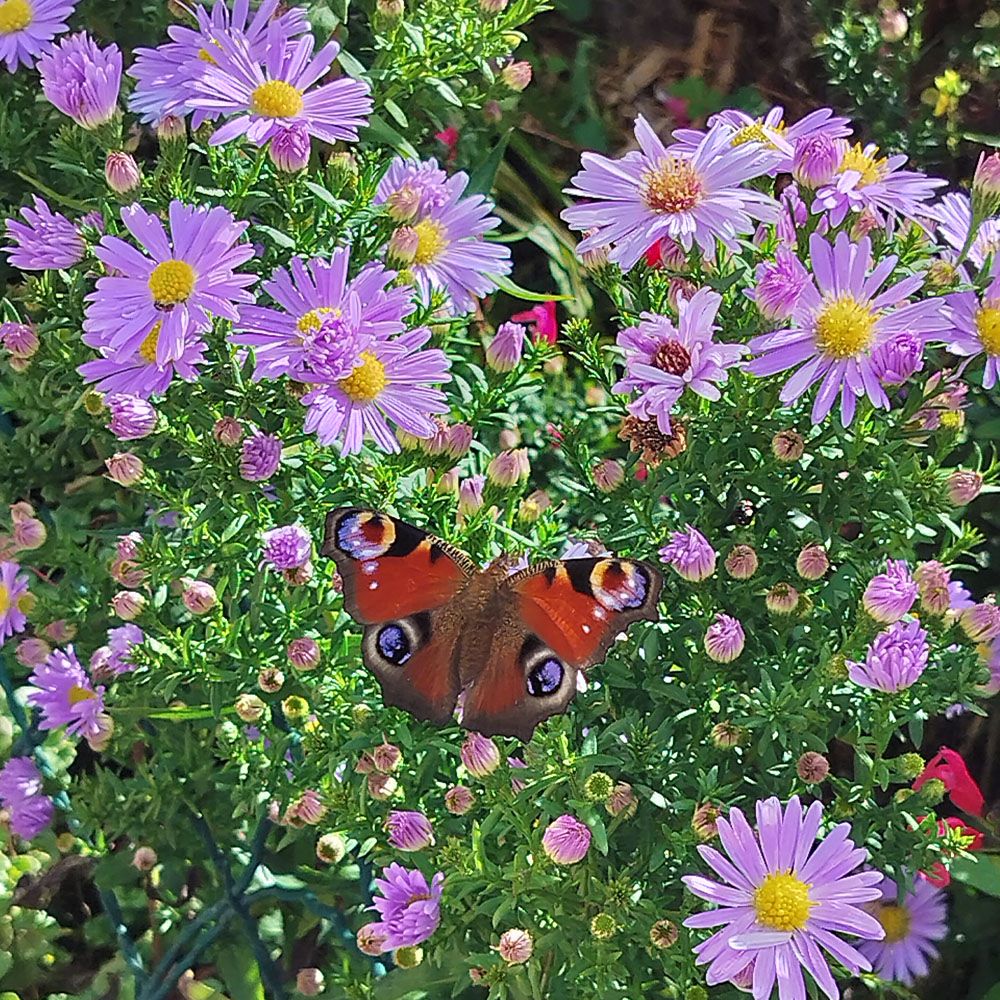
Butterflies and moths use their long proboscis to drink nectar, and pollen sticks to their legs and wings; moths often pollinate at night. Hoverflies and other flies are attracted to flowers with open structures or strong scents, and although they are generally less efficient than bees, they still play an important role. Beetles feed on pollen and floral tissues and often pollinate large, bowl-shaped flowers, while wasps occasionally contribute, though they are less specialized.
In France and most temperate regions, insects dominate pollination, with birds, bats, and small mammals playing minor roles. Pollinators are essential because without them, a large proportion of flowering plants and global crops would see reduced reproduction, threatening both biodiversity and food production.
Ecosystèmes : Bees and Butterflies

In France, pollinators are primarily insects, including honeybees, wild bees, bumblebees, butterflies, moths, hoverflies, and beetles. These tiny workers are essential to both natural ecosystems and agriculture, supporting the reproduction of wildflowers and facilitating the production of fruits, vegetables, nuts, and seeds.
Estimates suggest that around 72 percent of cultivated plants in France depend on insect pollination, and the economic value of pollination services is measured in billions of euros annually. While honeybees receive much attention, most pollination is performed by wild, unmanaged insects.
The country is home to roughly 1,000 species of wild bees, with thousands of other insect species contributing as well.
Unfortunately, pollinators in France face significant threats, including habitat loss due to agricultural intensification and urban expansion, exposure to pesticides, and climate change, which can disrupt the timing of flowering and pollinator activity.
Conservation assessments indicate that around one in ten bee and butterfly species is considered at risk of extinction. To counter these declines, France has implemented the Plan National en faveur des Insectes Pollinisateurs et de la Pollinisation (2021–2026), which aims to protect habitats, provide continuous floral resources, and support both wild and managed pollinators.
Pollinators + Agriculture
The survival of nearly 90% of flowering plants worldwide depends, at least in part, on insect pollination. Furthermore, more than 70% of crops—including almost all fruit trees, vegetables, oilseeds, and spices, as well as coffee and cocoa—depend partially or entirely on animal pollination, representing 35% of the tonnage of the food we eat.
This dependence exists for the production of fruits (tomatoes, squash, fruit trees, etc.) and for the production of seeds (carrots, onions, etc.).
It affects a majority of species that produce high-value foodstuffs, with the exception of certain crops that not depend on insects, such as wheat, corn, and rice.
The Main Ingredient : Nectar

Borago officinalis
Nectar is far more than just a sugary treat; it is a complex concoction teeming with amino acids, natural psychoactive compounds, and, of course, sugar.
This intricate mixture has given rise to the fascinating field of floral nectar mycology, where researchers explore the roles and effects of floricolous (this means ‘living in flowers’!!) yeasts—microbes that live in flowers. These yeasts profoundly influence pollinator behavior.
Bees and flies are particularly attracted to nectar containing yeast, and scientists have proposed several explanations for this preference: yeasts can enhance the scent of nectar, slightly increase its temperature, and even ferment it into low levels of alcohol, which may have subtle health benefits for pollinators.
Among the many yeast species that inhabit nectar, the aromatic Metschnikowia reukaufii stands out. Remarkably, this same yeast has captured the interest of beer enthusiasts. Brewers have isolated it, experimented with it in beer production, and it is even commercially available for home brewing. In the US, you can even buy it online to start your own brew! > White Labs
This striking convergence of ecology and human ingenuity shows how the microscopic communities living in flowers can influence not only pollinator health but also our culinary creativity, bridging the worlds of science, agriculture, and gastronomy in most excellent ways.
Ecosystems in Cities

Climate Change: Impacts on Pollinators
The impact of climate change on these relationships and rituals cannot be underestimated.
The scientific findings, drawn from the latest available research Mediterranean Assessment Report (MAR1), presented by Prof. Bou Dagher Kharrat, alongside Grammenos Mastrojeni, Senior Deputy Secretary General of the Union for the Mediterranean (UfM), reaffirm that the Mediterranean is a global climate hotspot. Average temperatures in the region have already risen by around +1.5°C, with projections reaching up to +5.6°C by 2100. Precipitation is expected to decline by 10 – 30%, increasing pressure on agriculture, energy systems and urban infrastructure. Coastal vulnerability is particularly acute: sea levels are rising by 2.8 mm per year, and a one metre rise by the end of the century could redraw the Mediterranean coastline, threatening cities such as Alexandria, Venice, Barcelona, Tunis and Izmir. Up to 20 million people could face permanent displacement if current trends persist.
Mediterranean Experts on Climate and environmental Change (MedECC)
“Either we decide to change by choice, together, or we will be imposed change by tragedy.”
André Corrêa do Lago, president of COP 30
These figures are daunting, and much of what is happening may feel beyond the reach of individuals like you or me. Yet even small actions matter. Keep this knowledge in mind, and let’s begin planting—because every seed sown is a step toward a healthier, more resilient future. Here is a quote to keep us going:
This is essential in order to propose appropriate solutions. Among the solutions already implemented, one can mention the reduction or abandonment of pesticide use, as is done in some urban areas, the development of wildflower strips or roadside flower margins that provide food resources for pollinators, and the construction of bee hotels that offer nesting sites for solitary bees.
Colin Fontaine, Researcher at the Museum of Natural History
Paris
Biodiversity : As the cities become more dense, more crowded, more full of things and metal and plastic, Paris has decided to take a strong stance for biodiversity, developping communal and municipal programs to bring the green back to the main scene 🙂
Seed Exchange in Paris: For our friends who live in Paris, there is fantastic news! All local librairies have become seed exchange spots, so you can find new varieties and exchange your seeds.
Gardens in Paris: Supported by the local governments, the initiative has already taken root. People are gardening in the streets, on roofs, balconies, taking over any centimetre of space possible to bring back the green
Calendar of activities: every month the city of Paris proposes different activities around biodiversity, ecology, gardening, permaculture, pollinators, birds that look incredible
Europe- Wide : The Urban Plans + project is really exciting, mixing landscape architecture with nature to form resilient ecosystems in which humans + technology are not opposed to plants + nature but are visibly a part of. Beyond the power of regenerating ecosystems and recreating spaces in which pollinators can flourish, it is also a powerful symbolic message : we are inextricably part of nature, to forget that distances us from the very thing that makes us human.
And more plants is always better 🙂
Discover more from plant d'Avenir
Subscribe to get the latest posts sent to your email.