
No products in the cart.
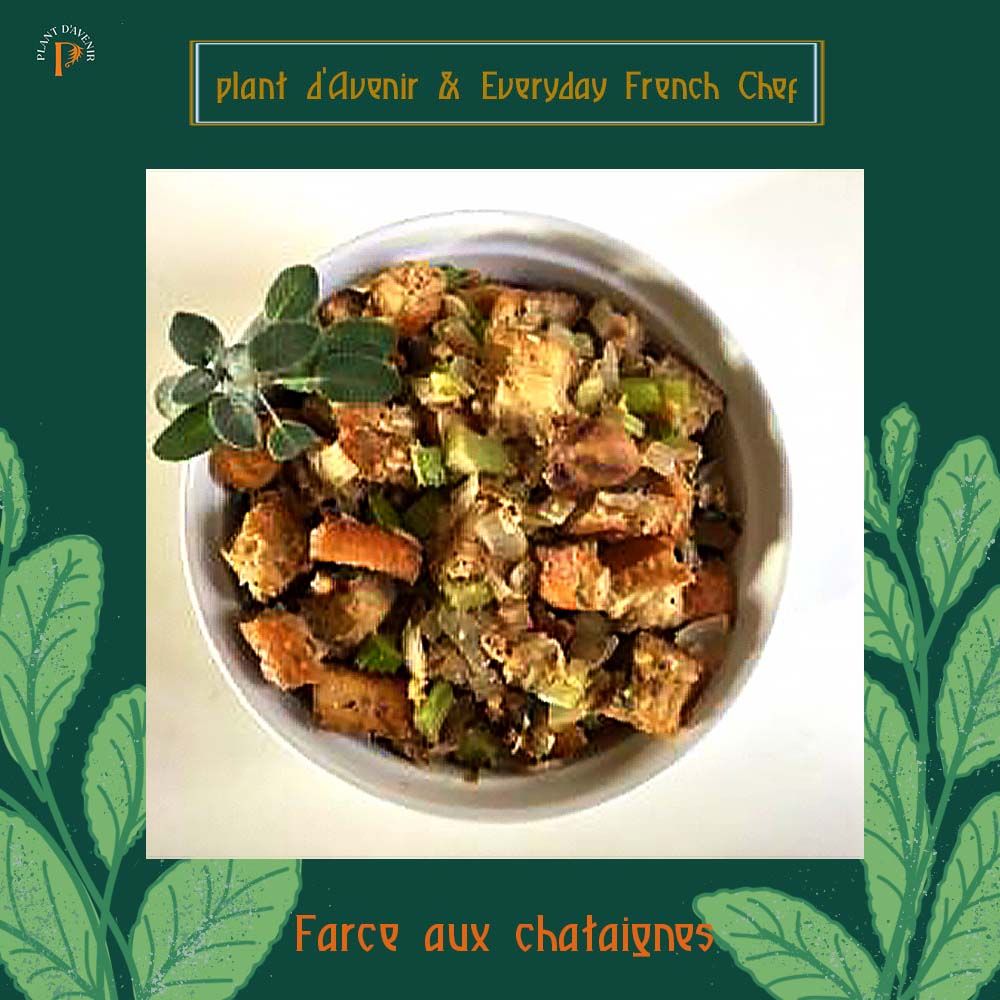
Farce aux chataignes / Chestnut Stuffing
⛄Our seasonal collaboration with The Everyday French Chef continues!⛄
The Everyday French Chef is a culinary website written by Meg Bortin – and features delicious, easy to make French recipes.
This recipe is a wonderful autumn recipe – used in the United States for Thanksgiving turkey stuffing and in France for Christmas chapon stuffing. It’s full of chestnuts and bread and butter – everything to keep you warm as the temperatures start to drop.
The Sage that is used in the recipe can be grown year round in a balcony, in a garden box, in the garden and is useful for a variety of recipes.
Discover Meg’s delicate recipe below and don’t hesitate to start your botanical journey on the way!
Click here to order your plant d’Avenir sage plants and have them delivered to your home!

Farce aux chataignes / Chestnut Stuffing
This is a classic bread and chestnut stuffing with a French twist thanks to the addition of fresh sage and herbes de Provence, a mixture of dried rosemary, thyme, savory, oregano and sometimes basil. The fresh sage imparts a musky flavor that deepens as the herb is sautéed in butter with the other ingredients. Once you’ve tried it, you’ll never look back.

Another French touch could be the use of baguette, the traditional long, crusty loaf, but this is not essential. Any bread may be used as long as its flavor won’t overwhelm the stuffing, i.e. rye and pumpernickel are best avoided. Most recipes call for stale bread, but in this one you can use fresh bread and dry it out in the oven — much faster.
As for the chestnuts, use vacuum-packed if available and, if not, canned chestnuts are fine. While canned chestnuts do not seem to be widely available in the States, I have it on good authority that one can find them at Safeway, and they are also on sale via Amazon. (I do not recommend roasting and peeling the chestnuts yourself as it is very time-consuming.)
The recipe calls for the addition of a little liquid. Either water or broth may be used — homemade chicken broth or, for vegetarians, homemade vegetable broth. Vegans may adapt the recipe by frying the ingredients in olive oil rather than butter.
Although you may choose to make your stuffing on Thanksgiving (or Christmas) Day, it may also be made ahead of time and frozen. This lightens the load if you’re preparing a big meal. You need only defrost the stuffing a day ahead of time and ensure that it’s at room temperature before stuffing your bird.
The recipe will make enough to stuff a 10-12 pound (5-6 kilo) turkey, possibly with extra to serve alongside. If you’d like more, use a bit more of each ingredient.
8 ounces (250 g) bread (1 baguette)
2 onions
6 stalks celery
1 cup (160 g/6 oz) vacuum-packed or canned chestnuts
8 ounces (250 g) butter
2-3 stems fresh sage leaves
1 tsp. herbes de Provence (see above)
1 tsp. salt, or less if using salted butter
freshly ground black pepper
1 cup (240 ml) water, homemade chicken broth or homemade vegetable broth
Preheat the oven to 350 F (180 C, gas mark 6).
Cube the bread. Place in a baking pan in a single layer — you can use two baking pans or the same pan twice. When the oven is hot, toast the bread cubes for 5-10 minutes, until they have dried out and are staring to brown.

While the bread is toasting, peel and chop the onions. Chop up the celery. Drain the chestnuts if necessary.
When the bread has come out of the oven, melt the butter over medium-high heat in a large pot (deeper than a frying pan). Add the onions and celery. Sauté, stirring occasionally, for about 10 minutes, until the onion and celery have softened.

Detach the sage leaves from their branches. Stack and slice thinly crosswise. When the onions and celery have softened, add the sage. Stir to blend. Add the herbes de Provence, salt and black pepper. Stir. Add the chestnuts. Go in with a fork to mash them up a bit. Cook for 5 minutes.
Now add the bread cubes. Stir well to cover the bread with the melted butter. Add 1/2 cup (120 ml) water or broth. Stir again. Cook for 5 minutes. If the mixture seems dry, add the same amount of liquid again. Cook until the liquid has evaporated, then turn off the heat and allow to cool.
The stuffing may be used to stuff a turkey or another type of poultry, or served on its own as a side dish. If made in advance, the stuffing may be frozen. In this case, defrost it a day ahead of time and bring it to room temperature before using.
Click here to find the recipe on The Everyday French Chef!

Discover more from plant d'Avenir
Subscribe to get the latest posts sent to your email.